
Organising VIP transport with discretion and complete control
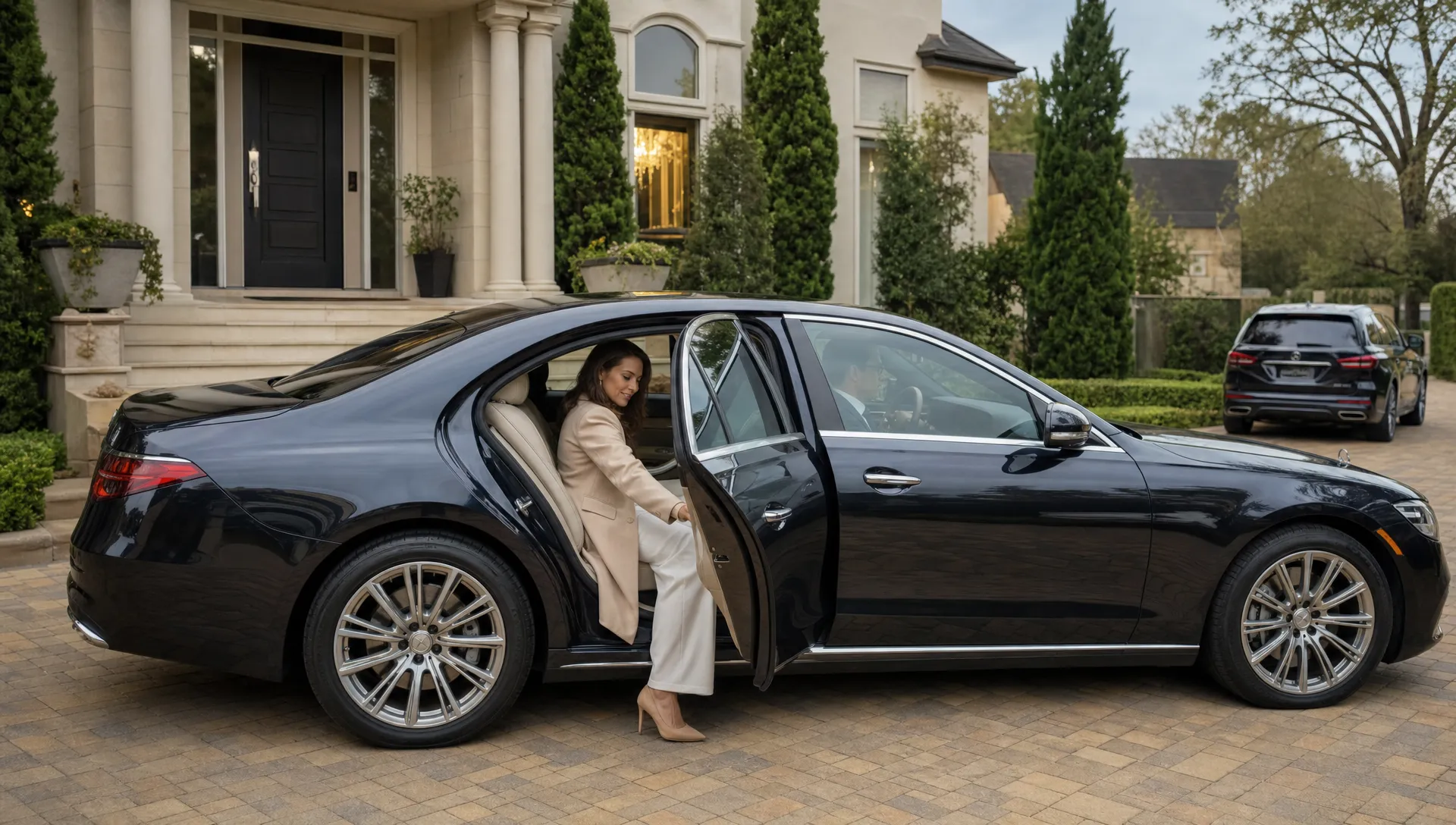
VIP transport stands or falls with trust. The car must be representative, but the true quality lies in what guests do not need to notice: no waiting time, no ambiguity, no visible stress, and no information shared unnecessarily.
For board members, international guests, investors, artists, speakers, and high-end private clients, transport is often part of a larger picture. A board meeting, private dinner, congress, roadshow, or family occasion demands planning, discretion, and control over every detail. Those who organise this well prevent transport from becoming a risk instead of a quiet certainty.
In this article, you will read how to professionally set up VIP transport, what arrangements are needed beforehand, and how to maintain complete control without having to manage every operational detail yourself.
Why VIP transport is more than luxury transport
With VIP transport, the bar is set higher than for a regular transfer. The passenger expects not only comfort, but above all peace of mind. This means the chauffeur is on time, knows the route, has alternatives ready, and conducts themselves correctly in an environment where confidentiality is taken for granted.
A luxury vehicle may impress, but it does not solve planning errors. If a guest is at the wrong entrance, a chauffeur does not know whom they are receiving, or changes are not passed on quickly, the premium character disappears immediately. Professional VIP transport is therefore about three things: preparation, behaviour, and control.
This is extra important for organisations because transport is often linked to reputation. An international speaker who is received smoothly, a director who can work undisturbed en route, or a guest who arrives discreetly at a private location, perceives the organisation as professional. The journey itself is short; the impression lingers longer.
Discretion begins before the first journey
Discretion is often confused with silence, but it goes beyond a chauffeur who says very little. It begins with the way information is collected, shared, and used. Names, roles, telephone numbers, locations, flight numbers, and programme details are sensitive. Not everyone in the chain needs to know everything.
A good transport plan works on the principle of minimal information. The chauffeur receives what is necessary to perform the journey correctly. The coordinator maintains the overview. The client knows who is reachable in case of changes. This prevents details from drifting through loose messages, forwarded calendars, or multiple contact persons.
When dealing with confidential VIP transport, pay close attention to these points:
Use clear pickup names or agreed-upon landmarks when full names are not necessary.
Only share essential programme information with chauffeurs and operational stakeholders.
Establish who is authorised to pass on changes so that chauffeurs do not respond to unauthorised requests.
Avoid open group chat apps with too many participants and sensitive travel information.
Agree in advance on how to handle press, photographers, or public arrival locations.
For highly sensitive journeys, such as transport surrounding acquisitions, political meetings, medical appointments, or family matters, it is wise to make explicit confidentiality agreements. Not because discretion is exceptional, but because ambiguity in this segment is unacceptable.
Complete control requires one operational plan
Complete control does not mean you do everything yourself. It means roles, responsibilities, and decision moments are clear beforehand. In VIP transport, this is important because changes often arise late: a flight is delayed, a dinner runs over, a guest wants to leave earlier, or a location's entrance turns out to change at the last minute.
With a single central transport plan, you prevent everyone from making their own assumptions. That plan does not need to be complex, but it must be complete enough to keep working under pressure.
Part of the transport plan | Why it is important | Example of an agreement |
|---|---|---|
Guest profile | Determines the desired level of discretion and service | Guest does not wish to be received visibly at the main entrance |
Schedule | Prevents waiting time and too tight transfers | Chauffeur is standby 20 minutes before arrival |
Contact structure | Keeps communication quick and clear | One client and one operational point of contact |
Location instructions | Prevents searching at hotels, terminals, and event locations | Pick up at service entrance instead of main lobby |
Change process | Makes last-minute adjustments manageable | Only the event manager may confirm journey changes |
Backup scenario | Limits risk in case of delay or cancellation | Alternative route and backup chauffeur available where necessary |
These kinds of agreements provide peace of mind. The passenger mainly notices that everything is correct. The client maintains control. The chauffeurs know what is expected of them.
The right transport solution per VIP situation
Not every VIP journey requires the same approach. A CEO driving between appointments daily has different needs to a delegation that must be received at multiple locations during a private event. Therefore, good organisation begins with the purpose of the transport.
For executives and board members, the emphasis is often on continuity, saving time, and confidentiality. A dedicated or carefully briefed chauffeur can ensure that travel time remains productive and peaceful. In that case, professional executive chauffeur services fit better than a standalone transfer.
At congresses, galas, private dinners, or corporate hospitality, it is more about flow, arrival windows, and coordination between location, security, hospitality, and transport. In those cases, event transport with central management is often the most logical choice.
For guests who wish to travel in their own car, for example due to comfort, privacy, or practical planning, a chauffeur in your own car can be suitable. This offers the appearance and familiarity of their own vehicle, with the peace of mind of a professional chauffeur.
Situation | Main priority | Suitable approach |
|---|---|---|
Board member with a busy calendar | Time saving and confidentiality | Executive chauffeur service with fixed planning and flexible adjustments |
International speaker | Reception, language sensitivity, and timing | VIP transfer with clear arrival instructions |
Private event | Guest flows and representative arrival | Coordinated event transport |
Private VIP appointment | Privacy and comfort | Private chauffeur or chauffeur in own car |
Roadshow or investor day | Tight schedule across multiple stops | Central journey plan with operational point of contact |
Chauffeur selection: behaviour is just as important as driving skill
For high-end transport, driving skill is taken for granted. The difference lies in attitude. A VIP chauffeur must be able to gauge when service is desired and when distance is better. Not every guest wants a conversation. Not every situation demands a visible presence.
Good chauffeurs are representative, punctual, and discreet. They prepare routes, check locations in advance where necessary, and communicate professionally. They understand that they act on behalf of the client, even if they are formally supplied by an external partner.
When selecting or briefing chauffeurs, pay attention to behaviour in these situations:
Reception at airport, hotel, office, or private address.
Interaction with assistants, security, location staff, and hospitality teams.
Waiting during dinners, meetings, or performances without being visibly present.
Responding to sudden changes without discussion with the passenger.
Handling confidential conversations in the car.
The best chauffeur is often the one who is hardly discussed afterwards, because everything went correctly and naturally.
Communication without noise
Many errors in VIP transport arise not from unwillingness, but from communication via too many channels. An assistant sends a change by email, an event manager calls the venue, a guest messages the chauffeur directly, and meanwhile someone is still working with an outdated schedule. On paper, everyone seems active; in practice, risk is created.
That is why a clear communication structure is essential. Determine in advance which channel is leading, who is authorised to confirm changes, and who guards the overall view. Especially with multiple guests or vehicles, there must be one operational truth.
For a small VIP assignment, one point of contact may suffice. For larger events, a journey list is often required with statuses, arrival times, chauffeurs, vehicles, and remarks per guest. Importantly, this information must remain up-to-date and not exist in different versions alongside each other.
In doing so, use short, unambiguous instructions rather than extensive explanations. A chauffeur does not need internal context during execution, but exact information: who, where, when, and via which entrance.
Risks you can limit in advance
VIP transport does not have to be complicated, but it is vulnerable to details. Precisely because passengers often have a tight schedule, a small delay can have major consequences. Think of a delayed flight, heavy traffic around an event location, road closures, limited parking options, or a guest staying longer in consultation.
A professional preparation takes such scenarios into account. Not everything can be prevented, but much is manageable. That begins with realistic margins. A schedule that only works if everything goes perfectly is not a VIP schedule.
Important preventive choices include:
Plan sufficient buffer time between arrival, reception, and follow-up appointment.
Check the correct entrance, parking option, and waiting area for chauffeurs in advance.
Take into account crowds around airports, stadiums, hotels, and congress venues.
Work with a clear escalation point in case of delay or change.
Determine in advance whether the chauffeur should receive visibly or stay at a distance.
Particularly with international guests, airport transfers deserve extra attention. Flight information, baggage handling, passport control, and terminal arrangements affect the actual pickup time. A fixed margin may then be too crude. It is better to determine per flight, airport, and guest profile which timing is appropriate.
What you need for a competitive quote
Anyone requesting a quote for VIP transport will receive a suitable proposal more quickly when the key parameters are clear. That does not mean everything must be final already. Especially with executives, events, and premium hospitality, programmes change regularly. A good request distinguishes between fixed components and expected variables.
Preferably supply the following information:
Date, times, and expected duration of the assignment.
Number of passengers and any travel companions.
Pickup and destination locations, including specific entrances if known.
Desired vehicle type or level of comfort.
Degree of discretion, for example, anonymous pickup, private entrance, or limited information sharing.
Number of journeys, stops, or waiting times.
Contact person for planning and contact person during execution.
Possible last-minute changes or dependencies, such as flights, speaker schedules, or dinners.
Based on this, a mobility partner can not only quote a price, but also advise on the right setup. Sometimes, a single vehicle with waiting time proves more efficient than multiple separate journeys. In other cases, dispersal is necessary to ensure arrivals run smoothly and representatively.
Organise it yourself or outsource while maintaining control?
For small assignments, internal organisation may be sufficient, especially if it concerns a single journey with a fixed time and location. As soon as multiple guests, variable times, confidentiality, or public visibility are involved, outsourcing often becomes wiser.
The most important thing is that outsourcing does not feel like letting go. A good partner removes the operational burden but ensures that you, as the client, maintain control over agreements, changes, and quality. This requires a dedicated point of contact, a clear plan, and chauffeurs who match the level of your organisation or guests.
Stuur Chauffeurs focuses on corporate and premium mobility where transport must not fail. Think of executive chauffeur services, VIP transport, event transport, and personal chauffeur services. With experienced, screened chauffeurs, proactive planning, and a dedicated point of contact, the transport remains manageable, even when the schedule is fluid.
Frequently asked questions about organising VIP transport
What is the difference between VIP transport and regular executive transport? VIP transport places more emphasis on discretion, representativeness, comfort, and control. The journey is often part of a larger programme, such as a director's schedule, event, private dinner, or reception of international guests.
How far in advance should I request VIP transport? The earlier the request is received, the better the planning can be aligned with vehicle, chauffeur, route, and any security or location instructions. Last-minute transport is sometimes possible, but for multiple guests or events, preparation is highly recommended.
Can VIP transport also be provided using the client's own car? Yes, in many situations a chauffeur in your own car is a suitable solution. This is interesting when the passenger prefers their own vehicle but wishes to be transported professionally and in an relaxed manner.
How is discretion guaranteed during VIP transport? Discretion begins with limited information sharing, clear lines of communication, professional chauffeurs, and pre-arranged instructions. Think of anonymous pickups, use of private entrances, and careful handling of names, routes, and programmes.
Is VIP transport suitable for events with multiple guests? Yes, provided that management is centrally organised. With multiple guests, a journey plan, clear arrival windows, chauffeur briefing, and a single operational point of contact are essential to prevent waiting times and confusion.
Have VIP transport organised professionally
Do you want to organise VIP transport for directors, guests, speakers, or a private event? Then a good vehicle is only one part of the solution. The quality lies in preparation, discretion, chauffeur selection, and complete control over execution.
Stuur Chauffeurs advises on the right approach for your situation, from a single discrete journey to a complete transport plan for multiple guests. Request a quote and receive a proposal that fits your schedule, desired appearance, and level of confidentiality.


Let us help you think about your mobility.
An informal consultation. We listen, analyse, and present a proposal that suits your situation.