
When in-house transport actually carries more risk
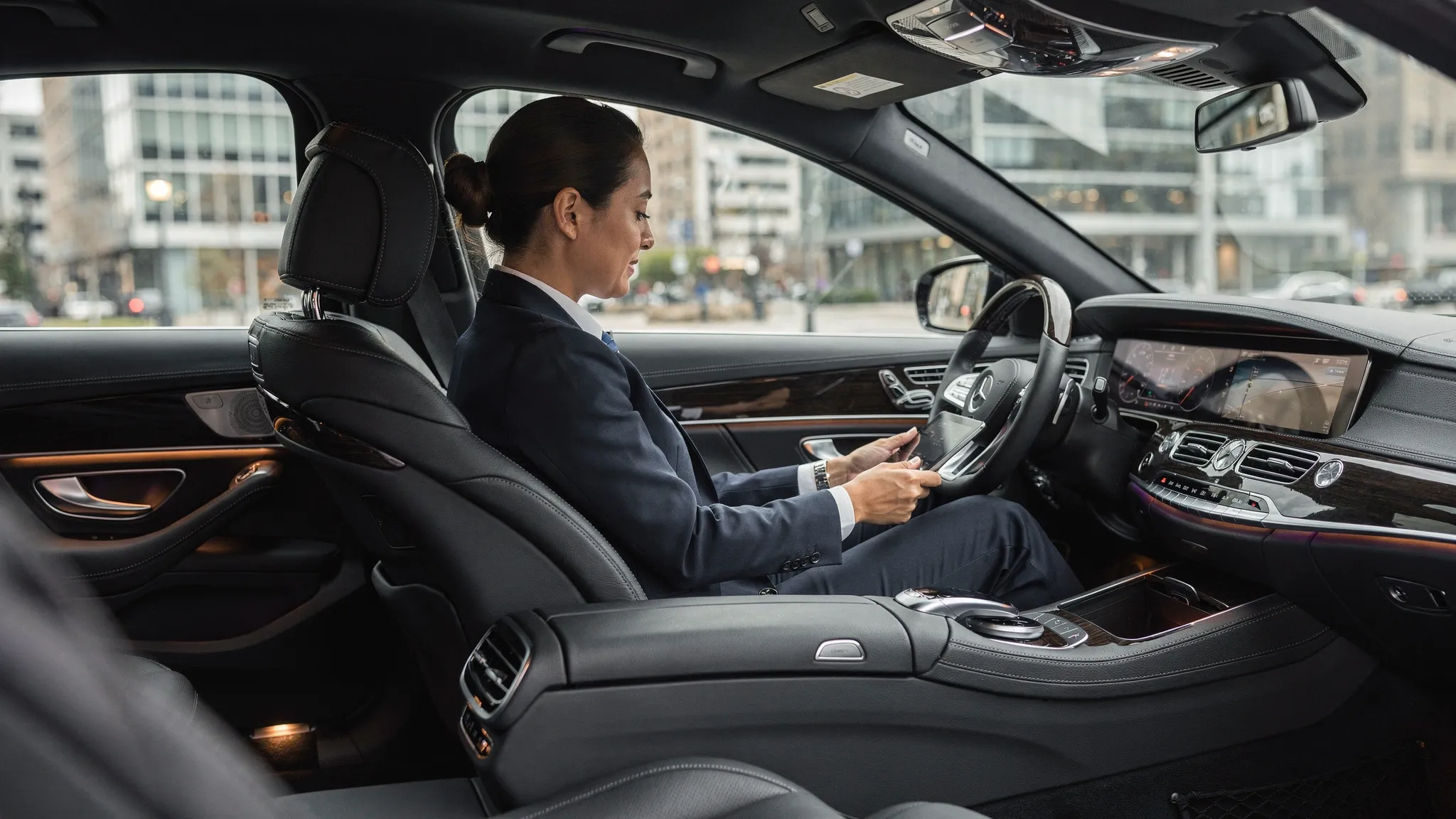
Transport managed in-house feels logical at first glance. You know the schedule, the passengers and the internal expectations. What is more, it seems cheaper to let an assistant, facilities employee, colleague or regular internal driver organise the journeys. Yet it is precisely in business transport, executive transport and VIP transport that the risk often increases when control remains entirely internal.
That risk is rarely in one single journey. It lies in dependence on individuals, limited backup, unclear responsibility, privacy-sensitive information and underestimating peak moments. As long as everything runs to plan, that remains hidden. Only when there is a delay, a last-minute diary change, a full event venue or a confidential passenger does it become clear how vulnerable the operation is.
For executives, entrepreneurs, event managers and organisations with high-end guests, transport is not a minor facilities matter. It is part of continuity, safety and presentation. In this article, you will read when in-house transport creates more risk, which signals point to that, and how to retain control without having to do everything yourself.
Why in-house management seems attractive
In-house management gives a sense of control. You work with familiar people, short communication lines and existing vehicles. For simple journeys, limited volumes and predictable schedules, that can work perfectly well. Think of occasional trips within one city or transport where timing, discretion and presentation are less critical.
With premium mobility, the situation changes. A journey to a board meeting, airport, investor meeting or private dinner requires more than getting from A to B. The chauffeur must anticipate waiting times, route changes, parking restrictions, privacy, reception protocol and the desired level of communication. For events, there is also the added challenge of aligning several passengers, vehicles and locations at the same time.
The problem is that internal transport often grows organically. First, one employee arranges a trip. Then more executives, guests, evening events and international arrivals are added. The way of working remains informal, while the impact of mistakes increases. At that point, in-house management may still look efficient, but operationally it has become vulnerable.
The main risks of transport managed in-house
1. Continuity depends on too few people
An internal transport process often relies on one or two people who know exactly how everything works. They know the executives’ preferences, the standard routes, parking options and the phone numbers of drivers or colleagues. That is useful until someone is ill, on holiday or has another priority at the same time.
Continuity is essential in executive transport. The diary keeps moving, even when an employee drops out or a journey suddenly changes. Without professional backup, improvisation quickly follows. That can lead to delays, unclear communication or a chauffeur who has not been properly briefed.
A specialist partner usually works with planning, cover and clear escalation lines. That makes transport less dependent on individual availability and more on a controlled process.
2. Last-minute changes consume a lot of internal attention
Business diaries change. A meeting overruns, a flight lands early, a dinner is moved or a speaker has to go to a different location unexpectedly. Internally, that may seem solvable with a few phone calls, but in practice it often disrupts several tasks at once.
With premium chauffeur services, flexibility is part of the operation. Buffers, alternative routes and accessibility are all considered in advance. For organisations where mobility cannot fail, that difference matters. It prevents an executive secretary, event manager or management assistant from spending the day dealing with transport instead of the programme content.
For situations in which journeys change regularly, an external chauffeur service for executive transport can bring more calm than an internal solution that has to be adjusted again and again.
3. Discretion and privacy are harder to guarantee
Executives and VIP guests often have confidential conversations on the move. Think of mergers, personnel issues, legal files, financial results or strategic decisions. A chauffeur hears and sees more than people sometimes realise.
When transport is arranged internally through varying colleagues or ad hoc hired chauffeurs, it is not always clear which confidentiality agreements apply. Passenger lists, phone numbers, hotel details and routes can also be privacy-sensitive. Carefulness is crucial, especially with international guests, public figures or board members.
Professional VIP transport requires chauffeurs who know when to be present and when to remain in the background. Discretion is not a separate quality, but a selection criterion, a briefing element and a fixed way of working.
4. Safety is interpreted too narrowly
Safety is not only about driving ability. It is also about calm, anticipation, route choice, vehicle checks, fatigue, weather conditions, departure buffers and avoiding unnecessary stress. A colleague who can drive well is not automatically a professional chauffeur.
For business journeys late in the evening or after an intensive meeting, this is even more relevant. The passenger should be able to work, make calls or relax while the chauffeur manages the traffic situation. Experience is decisive, especially on long days, with multiple stops or in unfamiliar locations.
Liability also deserves attention. Who is responsible in the event of damage, delay or an incident? Is the insurance suitable? Is it clear whether an employee is driving on behalf of the organisation or privately? With in-house transport, these questions sometimes remain unanswered until something goes wrong.
5. The organisation’s image is not consistent
Transport is often the first and last physical touchpoint with a guest. An international speaker, investor, commissioner or private client forms an impression before stepping into the meeting room. The chauffeur, car, punctuality and communication all contribute to that impression.
For brands focused on premium quality, reliability or precision, the transport experience must match. As a specialised branding and go-to-market agency would emphasise, brand trust is built not only in campaigns, but also in concrete moments of contact with customers, partners and guests.
When transport is arranged internally in varying ways, the experience can differ from one journey to the next. One time there is a polished welcome, the next time a guest has to search for the correct car. For high-end business environments, that inconsistency is a genuine reputational risk.
When in-house management can still be appropriate
In-house management is not inherently wrong. It can be suitable when transport is simple, infrequent and not critical. For example, for internal journeys with ample margins, without confidential passengers and without strict arrival times.
The balance changes as soon as journeys affect decision-making, guest experience, safety or the running of an event. At that point, transport is no longer a separate task, but part of business continuity and presentation.
Situation | In-house management usually feasible | External chauffeur service wiser |
|---|---|---|
Occasional internal journeys with generous planning | Yes | Sometimes |
Executive diary with multiple appointments in one day | Limited | Yes |
VIP reception or international guests | Risky | Yes |
Event with multiple vehicles and peak moments | No | Yes |
Confidential conversations on the move | Limited | Yes |
Last-minute changes and evening programmes | Risky | Yes |
This table is not a hard dividing line, but it does help make the real vulnerability visible. The greater the impact of delay, miscommunication or unprofessional reception, the less suitable fully internal management becomes.
Specific situations in which the risk increases
Executive transport with a busy diary
For executives, board members and entrepreneurs, travel time is often working time. A chauffeur therefore has to do more than drive. They must be ready on time, prepare routes, create calm and handle conversations discreetly. If an internal team organises this alongside other duties, friction quickly arises.
With professional executive transport, waiting times, route alternatives, passenger preferences and communication with the secretariat are considered in advance. That makes the transport more predictable and reduces the burden on the internal organisation.
Event transport with multiple arrival and departure times
Events bring peak demand. Guests arrive at the same time, programmes run over and departure flows are hard to predict. Parking pressure, security and limited access routes make it more complex.
With event transport, control is more important than the number of vehicles alone. There must be a run sheet, chauffeurs must know where they may wait, guests must receive clear instructions and someone must be available to make adjustments on the day itself.
When this is handled entirely internally, the pressure often falls on the event team. At the same time, that team is responsible for reception, the programme, suppliers, speakers and guests. Transport then becomes an additional risk factor on a day when there is little room for error.
VIP transport and confidential receptions
VIP transport requires control of detail. Not conspicuous where discretion is needed, but highly presentable where it is visible. Think of private clients, artists, investors, board members or guests with a high public profile.
A professional chauffeur understands that timing, attitude and communication are part of the assignment. The passenger does not need to explain anything and the client does not need to chase the details. For this type of journey, VIP transport is often safer than an internal or informal solution.
Chauffeur in your own car on busy or sensitive days
Sometimes an external car is not necessary or not desirable. An executive may prefer to travel in their own car for comfort, recognisability or privacy. In that case, a chauffeur in your own car can be a logical interim solution.
You retain the vehicle and the appearance that suits the passenger, while the execution is handled professionally. This is especially useful on long working days, dinners, roadshows or temporary situations in which driving yourself is not efficient or desirable.
Hidden costs of internal transport
A common reason for keeping transport in-house is cost control. Yet not all costs are visible. Internal hours, waiting time, stress, correction work, the risk of missed appointments and reputational damage are rarely stated explicitly on the invoice.
Therefore, do not look only at the rate for a chauffeur or vehicle. Look at the total value of reliable mobility. What does it cost if a board member arrives late? What does it mean if a VIP guest is collected from the wrong place? How much management time is lost to coordination and recovery?
A professional solution may seem more expensive per journey, but it can be cheaper in operational risk. Especially when transport directly affects commercial opportunities, board-level moments or a premium guest experience.
Retaining control without doing everything yourself
Outsourcing does not mean losing control. On the contrary, with the right arrangements you often gain more control. The difference is that the execution sits with a party that works with planning, chauffeurs, vehicles and changes every day.
Important arrangements include:
One fixed point of contact for planning, changes and evaluation.
Clear briefing per passenger, journey or event.
Clear communication agreements with the secretariat, PA or event team.
Pre-agreed service levels for executives, VIPs and other guests.
Backup scenarios for delays, overruns, illness or vehicle replacement.
Careful handling of personal data and confidential information.
With this foundation, the organisation remains the owner of the desired experience, while the mobility partner is responsible for professional execution. That is especially valuable for organisations with high expectations that do not want to burden their internal teams with operational details.
How Stuur Chauffeurs helps reduce risks in business mobility
Stuur Chauffeurs supports organisations with chauffeur services for executives, events, VIPs and private transport. The added value lies not only in the chauffeur, but above all in the combination of preparation, presentable execution and coordination.
Depending on the situation, this may involve a single chauffeur, a fixed pool, transport in your own car or a broader mobility solution for multiple guests and moments. For business clients, what matters most is control: clear agreements, experienced chauffeurs, flexibility when changes arise and a point of contact that understands what is at stake.
For private and business clients who want more calm in their diary on a structural basis, a private chauffeur may also be suitable. For example, for business dinners, busy travel weeks, presentational appointments or situations where comfort and discretion come first.
Signals that your organisation is ready for professional transport coordination
Many organisations wait too long to professionalise. The trigger is then an incident: a missed flight, a chauffeur who cannot be found, a guest arriving late or an executive who still has to drive after a long day. It is better to look earlier for signals that in-house management has reached its limit.
Pay particular attention to these signals:
Transport is taking more and more time from your secretariat, office management or event team.
Journeys are regularly changed at short notice.
Several executives, locations or guest categories are involved.
Confidential conversations or sensitive passenger data play a role.
The presentation of the transport differs from journey to journey or chauffeur to chauffeur.
There is no clear backup plan in the event of illness, delay or overruns.
You notice that the cheapest solution is not always the safest solution.
When several of these signals are recognisable, it is wise to stop treating transport as a series of isolated journeys. At that point, a structured solution with professional control is more appropriate.
Practical preparation for a quotation
A good quotation starts with clear information. Not to make the process more complex, but to prevent surprises. The sharper the context, the better the mobility solution fits the real need.
The following information helps determine the right approach:
Type of transport: executive, VIP, event, airport, private or chauffeur in your own car.
Number of passengers, vehicles and journey times.
Locations, desired arrival times and possible waiting times.
Service level, discretion requirements and any protocols.
Preference for own vehicle or vehicle with chauffeur.
Expected flexibility, such as overruns, changes or additional stops.
Contact persons for planning and day-of coordination.
With this information, a mobility partner can not only provide a price, but also advise where the risks lie and how these can be covered in advance.
Frequently asked questions
Is in-house transport always risky? No. For simple, low-frequency journeys with limited impact, in-house management can work perfectly well. The risk increases mainly with executive transport, VIP guests, confidential information, tight schedules and events with multiple transport movements.
When is outsourcing wiser than arranging transport internally? Outsourcing is sensible when punctuality, discretion, presentation and flexibility matter. It can also be more efficient and safer when internal employees spend a lot of time on planning and changes.
Do I lose control if I outsource transport? Not if the arrangements are properly structured. With one point of contact, clear briefings, service levels and feedback, you retain control over the desired experience while the execution is professionally organised.
Can a chauffeur also drive our own car? Yes, that is possible in situations where your own vehicle is preferred. A chauffeur in your own car combines familiar comfort and appearance with professional execution, for example on executive days, dinners or busy business diaries.
What should I look for when choosing a chauffeur service? Look for experience with business and high-end journeys, chauffeur screening, discretion, communication, flexibility, backup options and the extent to which the provider thinks along about planning and risks.
Professionalising transport without unnecessary complexity
Transport managed in-house may seem to provide control, but for critical journeys it can actually increase dependence and risk. Especially for executives, VIPs, events and confidential appointments, professional coordination is not a luxury, but a way to guarantee calm, reliability and presentation.
Would you like to know whether your current transport solution is still suitable, or would you like a concrete proposal for executive, VIP or event transport? Contact Stuur Chauffeurs for a bespoke quotation. Together, we will map the diary, risks and desired service so that your transport is professionally arranged before it becomes stressful.


Let us help you think about your mobility.
An informal consultation. We listen, analyse, and present a proposal that suits your situation.