
Business transport for board meetings late into the evening
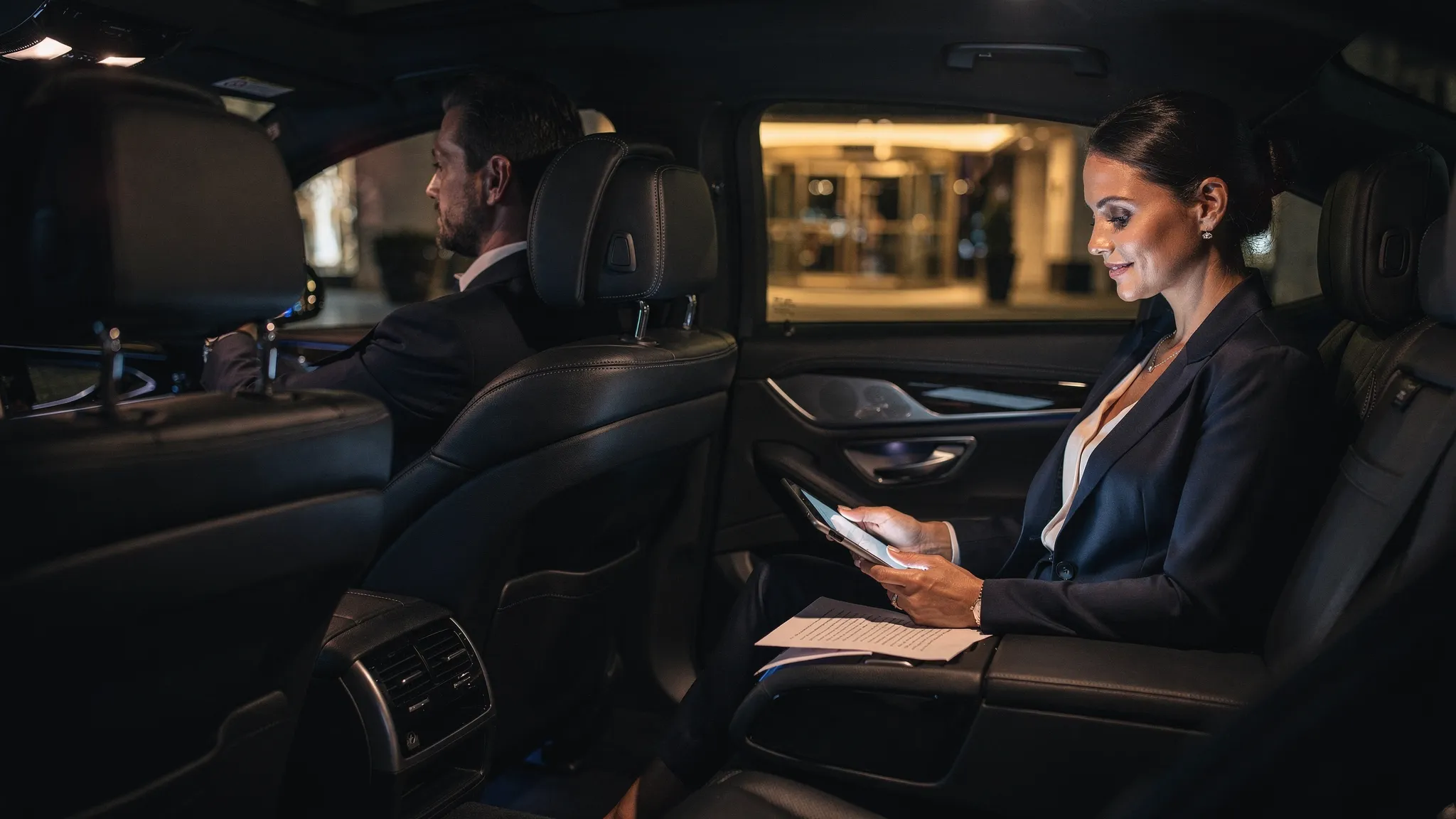
A board meeting that starts at 18:00 is rarely fully wrapped up by 20:00. Agenda items overrun, a private dinner is added, international guests land later than planned and, afterwards, executives still need to get home safely and discreetly. That is precisely when professional business transport makes the difference between improvising and staying in control.
For directors, supervisory board members, investors and external advisers, transport around a board meeting is not an afterthought. It is part of the overall meeting experience. The chauffeur must be on time, know when to be visible and, above all, when not to be. The planning must allow room for confidential conversations, last-minute changes and a representative welcome. Especially when meetings run late into the evening, a taxi or ad hoc solution is often too limited.
Business transport for board meetings requires more than a ride from A to B. It is about calm, punctuality, discretion and a single point of contact keeping track of the complete transport schedule.
Why late board meetings place different demands on transport
During the day, business mobility is often already tightly scheduled. In the evening, the margins get smaller. Fewer public transport options, fatigue after a long working day, driving in the dark, parking hassles at hotels or private dining venues and sometimes limited access to office buildings all create extra complexity.
For an executive who drives home after a long meeting, travel time is wasted time. For a chauffeur, that same journey is a controlled part of the agenda. The executive can still process notes, make a phone call or simply relax before the next day begins. That is an important reason why organisations consistently choose executive transport as part of business mobility.
In addition, board meetings are often confidential. Think of strategic repositioning, M&A, refinancing, remuneration policy, legal files or licensing agreements. In such situations, you do not want individual chauffeurs without a clear briefing, unclear waiting times or communication through too many links in the chain. You want a professional chauffeur who understands that being present sometimes means standing by without drawing attention.
The main risks with transport after a board meeting
With business evening programmes, problems are rarely caused by one major mistake. More often it is a series of small deviations that together create disruption. A meeting overruns by 45 minutes. One supervisory board member has to leave early. A guest wants to stop at a second address via the hotel. The parking location turns out to be closed off differently after 22:00. The chauffeur has no direct contact with the right coordinator.
Professional mobility management prevents these details from landing on the desk of the company secretary, PA or event manager. That is especially important when the meeting is sensitive from a governance perspective or when guests from outside the organisation are present.
Risk | Consequence | Professional solution |
|---|---|---|
Meeting overruns | Chauffeurs wait in the wrong place or leave too early | Flexible planning with clear waiting-time arrangements |
Multiple departure addresses | Confusion with pick-up and drop-off | Central transport schedule with up-to-date passenger information |
Confidential conversations in the car | Unwanted exposure of information | Discrete, screened chauffeurs and clear communication arrangements |
Late journeys after a long working day | Fatigue and loss of focus | Chauffeur drives, passenger uses travel time as needed |
Unknown location or parking situation | Delay at departure | Pre-agreed approach routes, waiting points and contacts |
So for board meetings running late into the evening, reliability is not just a matter of a smart car. It is a matter of preparation.
Which form of business transport suits a board meeting?
Not every board meeting calls for the same solution. Sometimes a chauffeur in your own car is the most logical option, for example when a CEO or owner-director wants to travel in a familiar vehicle. In other cases, a representative car with chauffeur is more suitable, especially for international guests, investors or members of the supervisory board.
A chauffeur in your own car is often efficient when the car is already available, the executive wants to keep their own workspace in the car, or when the day includes both business and private appointments. An external premium car with chauffeur is the stronger option when welcome, appearance and consistent quality matter.
Situation | Suitable transport form | Why this works |
|---|---|---|
CEO or executive with a busy evening schedule | Private chauffeur in own car | Familiar surroundings, maximum flexibility, no parking stress |
Board meeting with international guests | Representative car with chauffeur | Professional welcome and predictable transfer experience |
Supervisory board at multiple addresses | Multiple chauffeurs or coordinated schedule | Everyone arrives and departs according to the same protocol |
Private dinner after the meeting | Chauffeur on standby | No discussion about alcohol, parking or late return journey |
Offsite board meeting with hotel stay | Mobility management for outward journey, dinner and departure | One plan for all transport moments |
Highly confidential matter | Fixed chauffeur or fixed pool | Fewer changes, clear instructions, more calm |
The right choice depends on the agenda, the sensitivity of the meeting, the number of participants and the desired level of service. For a single executive, one chauffeur may be enough. For a full board with guests, advisers and follow-on dinners, central coordination is wiser.
Mobility management: the difference between a ride and a controlled programme
A board meeting often has a fixed running order. Arrival, welcome, meeting, break, private session, dinner, departure. Transport should follow that rhythm. Not as a separate booking, but as part of the programme.
Good mobility management starts with an intake. Which participants are travelling together? Who is allowed to share a chauffeur? Are there confidential combinations that should specifically not travel together? Where can cars wait without being visibly in the way? Who makes the decision when something changes?
Then comes the practical planning. Think route checks, buffer planning, waiting points, chauffeur briefing, contact moments and escalation arrangements. For an evening programme, it is wise to agree in advance what happens if the meeting overruns, if dinner is cancelled or if a guest unexpectedly needs to go to Schiphol or a hotel.
Component | What you want clarity on in advance |
|---|---|
Point of contact | Who coordinates changes before, during and after the meeting? |
Passenger list | Who travels when, from which address and to which destination? |
Waiting time | How long do chauffeurs remain on standby and where do they wait? |
Communication | Who receives chauffeur details and who may pass on changes? |
Discretion | Which information is necessary for the chauffeur and which is not? |
Back-up | What is the alternative in the event of overruns, illness, traffic or vehicle change? |
At Stuur Chauffeurs, this is exactly the area where a premium mobility partner adds value: not just driving, but also aligning, thinking ahead and, where necessary, switching at the last minute.
Discretion at board meetings: transport as an extension of the boardroom
In the boardroom, confidentiality is a given. It should be no different in the car. Yet transport in sensitive situations is still sometimes underestimated. The ride home is often the moment when executives debrief, call advisers or align on short decisions. A chauffeur must handle that professionally.
That means: no unnecessary questions, no comments about passengers or destinations, no informal updates to third parties and no broad sharing of journey information. The way chauffeurs present themselves at the entrance is also relevant. Sometimes visible reception is preferred. Sometimes a discreet waiting point at a distance is better.
For files with legal or commercial sensitivity, such as licences, IP enforcement or growth deals, organisations often work with specialist parties to limit risk. One example is Third Chair for IP and licence enforcement. The same principle applies to transport around such processes: share only necessary information, handle timing carefully and avoid logistics inadvertently giving anything away.
A professional chauffeur service understands that representation and confidentiality must go hand in hand. The chauffeur is welcoming where needed, but remains in the background when the situation calls for it.
Board meeting followed by dinner: plan the departure before you arrive
Many governance meetings do not end in the meeting room. After the formal agenda comes dinner, often at a different location. That is where most logistical variables arise. Not everyone stays for the same length of time. Some guests head to a hotel, others home or to an airport hotel. The atmosphere is less formal, but the transport quality must remain the same.
That is why it is wise to plan the departure before arrival. Not to the minute, because a dinner evolves with the conversation, but at the level of roles, order and accessibility. Who leaves first? Who decides the moment? Where are the cars? Is there a safe and representative place to get in? Have chauffeurs been informed about any changes to the seating plan or guest list?
For board dinners with external guests, private transport for executives and guests is often a better approach than booking individual rides. You keep control of the entire experience, from welcome to the final drop-off.
After 22:00: practical details that make the difference
Late in the evening, preparation matters more. The team at the office is smaller, venues partially close off and passengers want to depart without friction. The following points therefore deserve extra attention at every board meeting that may overrun.
Appoint one decision-making contact person for changes during the evening.
Confirm the exact pick-up location in advance, including an alternative exit in case of rain or crowds.
Plan waiting time realistically, especially for private sessions without a fixed end time.
Limit group chats and separate messages so chauffeurs do not receive conflicting instructions.
Check whether parking spaces, barriers and entrances are accessible late in the evening too.
Distinguish between visible VIP reception and discreet executive positioning.
Have a scenario ready for the last guest, even if the programme ends much later than planned.
These details may seem operational, but they determine the experience. An executive notices good mobility management mainly because nothing needs to be explained. The car is in the right place, the chauffeur knows what is happening and departure feels natural.
What determines the cost of business transport for board meetings?
The cost depends not only on distance. Especially with evening programmes, waiting time, availability, flexibility and coordination play a major role. A short journey with a lot of uncertainty can require more organisation than a longer journey with a tight schedule.
For an accurate quotation, it is important to provide not only the addresses, but also the context of the meeting. Is it for one executive or a full board? Are there international guests? Is there a follow-on dinner? Do you expect overruns? Is your own car available, or do you want a representative car with chauffeur?
Quotation information | Why this is needed |
|---|---|
Date and time window | Determines availability and waiting time |
Number of passengers | Determines chauffeurs, vehicles and planning |
Addresses and stops | Makes route checks and buffer planning possible |
Type of meeting | Provides insight into discretion, appearance and flexibility |
Vehicle preference | Own car, premium saloon, MPV or another suitable solution |
Expected overrun | Prevents a schedule that is too tight at the end of the evening |
On-site contact | Speeds up adjustments during execution |
Anyone who shares this information early usually receives a sharper and more realistic proposal. Not because everything is fixed, but because the transport partner can organise the right capacity and control.
When is a fixed chauffeur pool sensible?
For recurring board meetings, a fixed chauffeur pool is often the most professional solution. Executives see familiar faces, chauffeurs know the preferred routes and the organisation does not have to explain what matters from scratch every time. That brings calm, especially with sensitive or recurring executive agendas.
A fixed pool does not mean you are tied to a full-time chauffeur. For many organisations, a flexible pool is exactly the interesting option: trusted quality when needed, without permanent staffing. This aligns with the way modern organisations view premium mobility. Not as ownership, but as reliable service that moves with the agenda.
Continuity, chauffeur quality and coordination also play a major role in tenders and structured executive mobility. The case of executive transport for Erasmus MC shows how professional organisations approach mobility at the highest level: with attention to reliability, presentation and fixed agreements.
How Stuur Chauffeurs organises board meeting transport
Stuur Chauffeurs supports organisations that do not want noise in their business mobility. For board meetings, that means a tailor-made solution, with experienced and carefully selected chauffeurs, a clear point of contact and room for changes when the agenda shifts.
Depending on your situation, Stuur Chauffeurs can drive your own car or provide a suitable representative car. For one executive, the emphasis is often on calm, confidentiality and efficient travel time. For multiple board members or VIP guests, the focus shifts to planning, reception and central coordination.
The approach is practical. First, the context of the meeting is discussed. Then comes a proposal with the right form of transport, time windows, vehicles, chauffeur deployment and coordination arrangements. During execution, there remains one clear line for changes. That way, the organisation does not have to connect chauffeurs, guests and venues itself while the meeting is still in progress.
For organisations that more often hire a chauffeur or compare multiple transport options, it is worthwhile to clarify the main choices in advance. In this article about hiring a chauffeur for your organisation, the considerations are set out clearly.
Frequently asked questions
Is business transport for one board meeting possible? Yes. A professional chauffeur or coordinated transport solution can also be deployed for a single evening. For recurring board meetings, a fixed chauffeur pool or framework agreement may be more efficient.
Can a chauffeur drive our own executive car? Yes, that is often a practical choice when the executive wants to use their own vehicle. The chauffeur then takes over the driving, parking and waiting, while the passenger travels in familiar surroundings.
What if the board meeting ends later than planned? That can be included in the planning in advance. Make clear agreements about waiting time, accessibility and who may pass on changes. That keeps departure organised even if there is an overrun.
Is this only suitable for large organisations? No. Business transport for board meetings is also relevant for family businesses, private equity firms, scale-ups, holding companies and business service providers that want to transport executives or guests professionally.
Can several board members travel together? They can, but it requires careful planning. Not every combination is desirable because of confidentiality, timing or comfort. A good transport partner discusses this in advance.
How far in advance should I arrange transport? The earlier the main outlines are known, the better. Last-minute deployment is sometimes possible, but for evening programmes, multiple guests or specific vehicle requirements, timely coordination is advisable.
Discuss your board meeting transport to suit your needs
Are you organising a board meeting, supervisory board meeting, executive dinner or private gathering that may run late into the evening? Then it pays to arrange transport professionally in advance. Not only for comfort, but above all for calm, discretion and control.
Stuur Chauffeurs will think along with you about the right solution: a chauffeur in your own car, representative executive transport, VIP transport for guests or complete mobility management around the evening. Call 010 307 4525 or request a bespoke proposal from Stuur Chauffeurs.


Let us help you think about your mobility.
An informal consultation. We listen, analyse, and present a proposal that suits your situation.