
Organising executive transport without unnecessary intermediaries
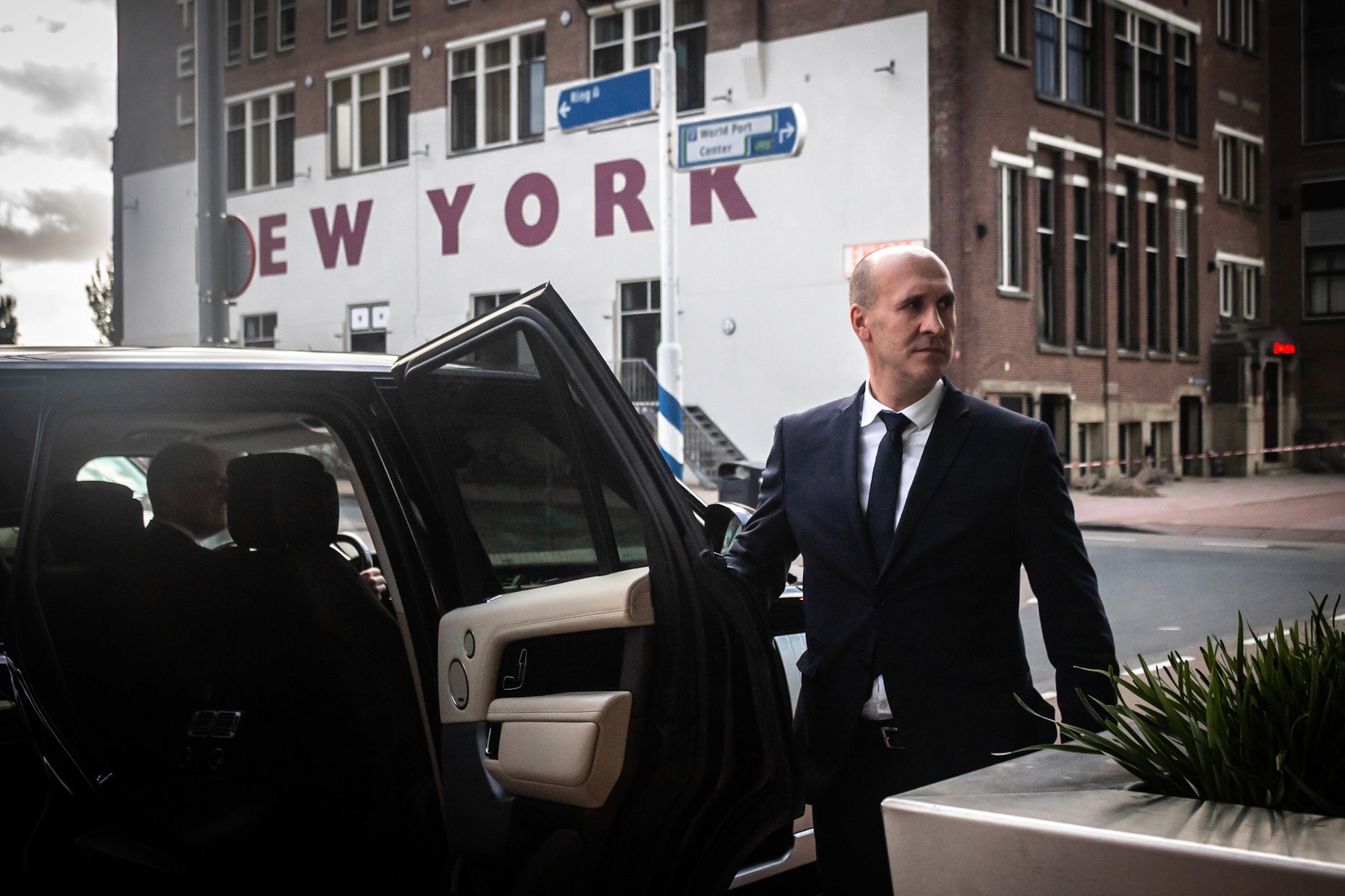
Executive transport requires more than a smart car and a professional driver. For executives, board members and VIP guests, it is above all about predictability: departing on time, being able to work discreetly on the way, arriving without distraction and being able to switch immediately when plans change. That is exactly where things often go wrong when too many parties sit between the client, planner and driver.
Anyone organising executive transport without unnecessary links brings responsibility back to one clear point of control. That makes operations calmer, communication faster and the passenger experience more consistent. For organisations whose diaries are constantly changing, this is not a luxury. It is a prerequisite for reliable business transport.
Why fewer links make executive transport better
In regular passenger transport, an extra handover can sometimes do little harm. In executive transport, it is different. An executive does not simply get into a car for a trip from A to B. It is often about connections to board meetings, confidential phone calls, international flights, dinners, roadshows or welcoming external stakeholders.
Each extra link can cause delay, differences in interpretation or unclear responsibility. Think of an assistant passing a journey on to a travel desk, which then brings in a broker, who then contacts a local operator, after which the driver only receives the latest information at the last minute. That may work for a simple trip. For a changing executive schedule, it becomes fragile.
Fewer links does not mean everything must be done by one person. It means the control is clear. One party oversees the whole, knows the passenger’s preferences, directs the drivers, communicates changes and takes responsibility when the schedule comes under pressure.
Where unnecessary links usually arise
Unnecessary links often arise not from bad intentions, but from fragmentation. Different departments book transport in their own way. Executive assistants work with fixed contacts, events with a separate transport provider, finance with purchasing conditions and HR with relocation partners. As a result, there is no single overall picture.
For executive transport, these points of friction are particularly recognisable:
Uncertainty over who confirms the journey definitively.
Drivers receiving changed pick-up locations too late.
Multiple contacts approaching the same passenger.
No central overview of preferences, security requirements and confidential instructions.
Last-minute changes having to be passed on through too many intermediate steps.
A professional chauffeur service removes that noise from the chain. Not by limiting communication, but by structuring it.
Situation | Many links | One point of control |
|---|---|---|
Journey change | Assistant, travel desk, broker, operator and driver each need to be updated separately | Change goes to one point of contact, which immediately directs planning and the driver |
Driver briefing | Information arrives fragmented or too late | Driver receives a concise and complete briefing in advance |
Privacy | More parties see journey details and passenger information | Data access remains limited to those who need the information |
Responsibility | Unclear who steps in if there is a delay | One party monitors planning, alternatives and communication |
Passenger experience | Variable quality and style | Consistent service, appearance and driving style |
The ideal organisational model: central control, short lines
Executive transport without unnecessary links starts with a simple principle: the client should not have to coordinate what the mobility partner can solve. The organisation passes on the requirement; the partner translates it into planning, driver allocation, vehicle choice, back-up and execution.
A strong model has three layers. The first layer is strategic: which executives, guests or teams use the service, what level of service is required and which situations are critical? The second layer is operational: journeys, routes, drivers, vehicles, instructions and changes. The third layer is evaluative: are punctuality, discretion, comfort and communication structurally secured?
For organisations hiring a driver for the first time or wanting to sharpen their existing process, it is wise to set out the key choices first. In the article Hiring a driver for your organisation? Start with these choices you will find a practical deep dive into that decision-making.
Step 1: appoint one owner for executive transport
The most effective improvement is often organisational, not logistical. Appoint one internal owner for executive transport. This could be an executive assistant, office manager, facilities manager, event manager or procurement lead. This person does not need to arrange every journey themselves, but they do oversee the agreements, preferences and escalation paths.
On the supplier side, there should likewise be one fixed point of contact. This prevents changes from being routed through multiple inboxes or phone numbers. For executive diaries, speed matters, but controlled speed matters more. A good mobility partner responds quickly and at the same time ensures the right driver receives the right information.
Step 2: work with a compact, fixed intake
Many errors in executive transport arise because journey information is too broad. “Pick up at 08:00 at the office” may seem sufficient, but says little about entrance, security procedure, desired waiting time, luggage, fellow passengers, route preference, phone silence or alternative entrance.
A fixed intake prevents interpretation. For recurring executive transport, much information can be recorded in a profile, so that every request does not need to be explained again. Think of preferred drivers, preferred form of address, vehicle type, driving style, privacy preferences, favourite routes and how to handle waiting time.
Information | Why this matters |
|---|---|
Full schedule | Prevents separate journeys from failing to connect with one another |
Passenger profile | Makes the service personal without having to give instructions again each time |
Pick-up details | Reduces the chance of searching, calling or visible confusion |
Contact person for changes | Ensures the driver does not unnecessarily have to disturb the passenger |
Privacy and security preferences | Limits data sharing and safeguards discretion |
Preferred vehicle solution | Makes the choice between own car, saloon, MPV or VIP transport clear |
Step 3: choose a fixed pool rather than random allocation
A fixed driver is not always necessary. A fixed pool is often smarter. It gives you continuity without becoming dependent on one person. For executives, recognition is valuable: drivers know the preferences, understand how the passenger works and understand when silence matters more than conversation.
At the same time, a pool makes planning more resilient. In the event of illness, delay or overlapping journeys, another familiar driver can be assigned. The passenger experience remains consistent, while the organisation remains flexible.
This is especially relevant for organisations with multiple executives, changing diaries or occasional peaks. Think of investor days, board meetings, international receptions, acquisitions, conferences or periods with a lot of airport transport.
Step 4: define communication arrangements in advance
With premium executive transport, communication should be as invisible as possible to the passenger. The driver must know when to inform proactively, when to wait and through whom changes should be handled. This prevents an executive being called during a meeting about a practical question that could also have been solved through the assistant.
So define in advance who receives operational updates. For some organisations, that is the executive assistant. For events, it may be a mobility coordinator. For international guests, it may be a hospitality manager. The important thing is that there is one line for changes and escalations.
At Stuur Chauffeurs, a fixed point of contact is part of the professional approach, so that planning, driver briefing and execution do not stand apart from one another. That is essential when mobility cannot be allowed to fail.
Step 5: decide when a chauffeur in your own car is sufficient
Not every executive transport requirement needs an external car. In many cases, a chauffeur in your own car is actually the most efficient and discreet solution. The executive travels in a familiar vehicle, the appearance remains consistent and documents, facilities or personal settings remain available.
A chauffeur in your own car is particularly suitable when the organisation already has representative executive cars, when confidentiality is important or when the executive regularly has several appointments in one day. You can read more about this in When a chauffeur in your own car is the smartest solution.
A premium vehicle from the service provider is more logical for VIP receptions, international guests, events, temporary assignments or when the organisation’s own car is unavailable or unsuitable. The choice is therefore not a standard choice, but part of the control.
Step 6: make back-up part of the plan, not the emergency fix
Back-up is often only discussed when something goes wrong. In executive transport, that is too late. Delays due to traffic, overrunning meetings, flight changes or security measures are not exceptions. They are part of the reality of business mobility.
A good plan therefore includes buffers, alternative routes, reachable coordination and clear priorities. Which journeys are critical? Which passenger should never have to wait? When is a second vehicle kept on standby? Which driver remains available if a dinner runs late?
The difference between ad hoc journeys and professional executive transport lies precisely in this preparation. Ideally, the passenger notices nothing of the complexity behind it.
When mobility control goes beyond executive transport
Sometimes executive transport is part of a broader operation. For example, a multi-day board meeting, a conference with VIP guests, an international delegation or a corporate event. In that case, executive transport must connect with group transport, shuttles, airport reception, hotel transfers and security arrangements.
In such situations, it is unwise to use a separate supplier for each component without central direction. Transport should be planned as one whole. The case Achmea staff festival shows how important central transport control becomes once volumes, routes and peak moments come together.
Mobility for international executives often also goes hand in hand with relocation, housing and local support. For organisations that move expats or executives internationally, specialised platforms for long-term rental and moving support can be valuable on the housing side, while local executive transport is directed centrally and discreetly.
What fewer links deliver in concrete terms
The benefit of fewer links is not only operational. It also affects cost control, risk management and the organisation’s image. An executive who arrives relaxed and on time experiences better support. A guest who is received without having to search feels that the organisation has a grip on the details.
Result | Effect for the organisation |
|---|---|
Faster changes | Less internal time spent calling, emailing and confirming |
Better punctuality | Less risk of missed appointments or unnecessary waiting time |
Higher discretion | Less spread of sensitive journey and passenger information |
Consistent appearance | Drivers, vehicles and communication match the organisation’s level |
Greater scalability | Peaks can be absorbed without loss of quality |
Clearer costs | Less hidden coordination time and fewer separate emergency fixes |
For executives themselves, the biggest gain is often time. Travel time becomes working time, rest time or preparation time. In What an executive driver adds to business mobility this value is explored further.
What to look for in a quote for executive transport
A quote for executive transport should not only include an hourly rate or journey price. For high-end business transport, the conditions are especially important. So do not just ask what it costs, but also how the delivery is secured.
Pay attention to the following elements:
Is there one fixed point of contact for planning and changes?
Are drivers screened and briefed on the assignment in advance?
Can a fixed pool of drivers be used?
Are there agreements on discretion, communication and data sharing?
How are last-minute changes or overruns handled?
Is there a choice between a chauffeur in your own car and transport with a premium vehicle?
Is there support for mobility control for events, VIP transport or multi-day programmes?
The best quote is not always the shortest. It should, however, make clear who is responsible for what, what happens when changes occur and how the passenger experience is monitored.
Example: executive transport at tender level
For organisations with high demands for continuity, sustainability and professionalism, executive transport is often part of policy. Think of healthcare institutions, multinationals, public organisations and companies with major governance responsibilities.
The case Erasmus MC executive transport shows how executive transport can be structured at tender level: with clear quality requirements, professional drivers, sustainable vehicles, a fixed pool and structural availability. That kind of approach suits organisations that do not want to improvise each time, but want to secure mobility.
Common mistakes when organising executive transport
The first mistake is starting too late. Executive transport seems simple until diaries shift, flights are delayed or several executives need transport at the same time. Early coordination creates room for better driver planning and the right vehicle choice.
The second mistake is focusing only on price. Of course, business transport must be financially responsible, but the cheapest solution can become expensive if internal staff constantly have to adjust things or if the passenger experience comes under pressure.
The third mistake is unclear commissioning. If multiple departments direct the same supplier separately, fragmentation still arises. One internal point of contact and one external mobility partner keep the overview sharp.
The fourth mistake is paying too little attention to privacy. Journey data says a lot about diaries, meetings and locations. Limit information to those who need it and work with drivers who understand discretion as a professional principle.
Frequently asked questions about organising executive transport
What is the difference between executive transport and a standard chauffeur service? Executive transport is aimed at executives, board members and VIP guests with high demands for punctuality, discretion, comfort and representation. The driver and planning are aligned with the passenger’s schedule and preferences.
Why is one point of contact so important? One point of contact prevents changes from being routed through multiple parties. That speeds up communication, reduces errors and ensures the driver always works with the latest information.
Can executive transport also be carried out in our own car? Yes, often it can. A chauffeur in your own car is suitable when the organisation has a representative executive car and the passenger values familiarity, privacy and continuity.
When is a fixed pool of drivers better than one fixed driver? A fixed pool provides recognition and continuity, while avoiding dependence on one person. This is especially useful with changing diaries, illness, holidays or several executives.
What information is needed for a good quote? Share the number of passengers, type of journeys, frequency, desired vehicles, start and end locations, privacy preferences, desired flexibility and any peak moments. The sharper the input, the better the proposal will fit.
Organising executive transport with one clear line
Would you like to organise executive transport without unnecessary links? Stuur Chauffeurs supports organisations with professional chauffeur services, central control, experienced drivers and bespoke solutions for executives, VIP guests and business mobility.
Discuss your situation without obligation and receive a proposal that fits your schedule, service level and desired degree of flexibility. Call 010 307 4525 or go to Stuur Chauffeurs for a tailor-made quote.


Let us help you think about your mobility.
An informal consultation. We listen, analyse, and present a proposal that suits your situation.