
Seamlessly coordinate event transport for executives
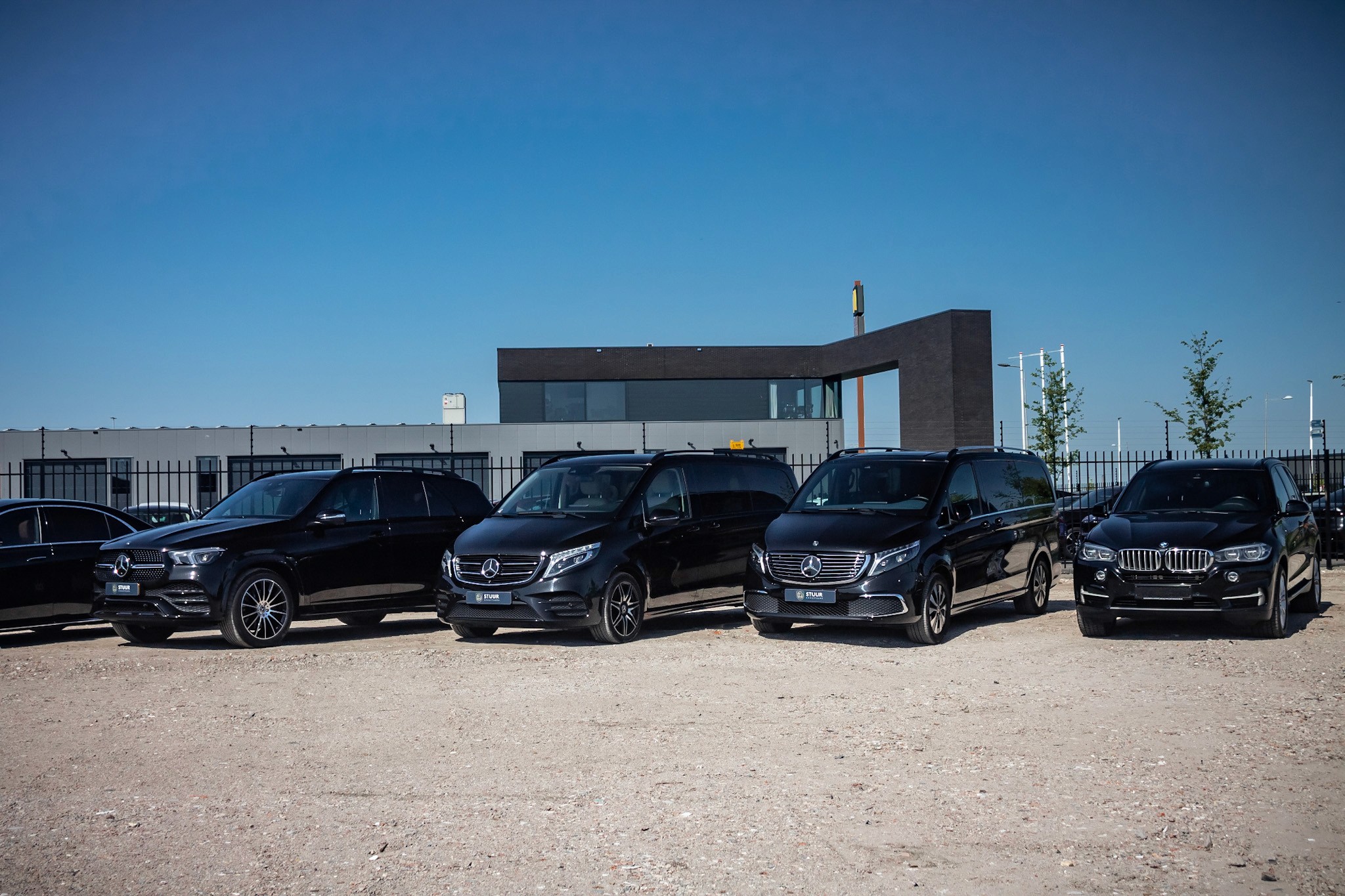
At events where executives, board members, investors, international guests or keynote speakers are present, transport is not a secondary consideration. It determines how calmly someone arrives, how much control the organisation retains over the day and how professionally the event is experienced. Flawless event transport for executives does not mean nothing ever changes. It means changes, delays and peak periods are absorbed without visible friction for the guest.
For event managers, executive secretariats and organisations with high-end business relationships, this requires more than booking cars. It calls for mobility coordination: one plan, one point of contact, discreet chauffeurs, clear routes and enough flexibility for last-minute adjustments.
Why executive event transport is different from regular transport
In regular event transport, the focus is often on capacity: how many people need to get from A to B, at what time and in what type of vehicle. Executive transport adds an extra layer. The schedule is tighter, the stakes are higher and tolerance for noise is lower.
Executives often travel between multiple locations in one day: airport, hotel, boardroom, dinner, event venue and sometimes a private address. Along the way, they take calls, prepare presentations or hold confidential conversations. A chauffeur must therefore not only drive safely and punctually, but also understand when communication is welcome and when it is not.
Appearance matters too. The arrival of a CEO, board member, speaker or VIP guest is part of the overall experience. A messy pick-up zone, a chauffeur who does not know where the entrance is, or a vehicle that does not match the level of the event can detract from the organisation.
Start with one central coordination point
The biggest mistake in executive event transport is fragmentation. One assistant books a taxi, the event manager arranges shuttles, security gives separate instructions and the venue has its own traffic rules. This creates confusion at exactly the moment when everything needs to run smoothly.
Work therefore with one central coordination point for all transport flows. Internally this can be an event manager or executive secretary, but operationally the execution is best placed with a mobility partner that coordinates chauffeurs, vehicles, routes and changes.
Component | Internal owner | Mobility partner |
|---|---|---|
Guest list and priorities | Determines who travels and what service level is required | Translates this into vehicle planning and chauffeur deployment |
Schedule | Provides the programme, flights, hotel details and changes | Builds in buffers, routes and back-up scenarios |
Communication | Keeps in contact with management, assistants and event team | Directs chauffeurs and monitors delivery |
Privacy and protocol | Shares sensitivities, names and access requirements | Limits information to what chauffeurs need |
Escalation | Makes decisions when priorities conflict | Flags risks and advises appropriate action |
A good coordination point prevents chauffeurs receiving separate instructions from different people. This is important for speed, but also for discretion and safety.
Design the journey around the executive, not around the vehicle
A flawless transport plan does not start with the question of how many cars are needed. It starts with the question of what the guest's day looks like. An executive who, after an intercontinental flight, has to go straight to a panel discussion requires a different approach from a speaker who is attending a private dinner afterwards.
Map the full guest journey for each executive. Think about arrival, reception, waiting time, transfer, access to the venue, any intermediate stops and departure. The transitions between those moments are precisely where sensitivity lies. A guest who lands smoothly but then has to spend ten minutes looking for the chauffeur will still experience the transport as insufficiently organised.
Record at least:
Name or agreed guest code, position and priority level.
Flight, train, hotel or private address details as necessary.
Preferred contact person, for example assistant, PA, security or event lead.
Language preference, luggage, number of passengers and any entourage.
Specific instructions regarding discretion, media, security or protocol.
Expected waiting times, intermediate stops and any overruns.
Handle personal data carefully. Chauffeurs only need information relevant to the journey and the reception. Limit the sharing of passenger lists, use clear retention periods and avoid unnecessarily broad sharing of sensitive diary information.
Work with service levels by guest category
Not every guest requires the same transport solution. By defining categories in advance, you avoid ad hoc decisions on the day itself. That makes the operation calmer and keeps costs more manageable.
Guest category | Typical requirement | Suitable transport approach |
|---|---|---|
CEO or board member | Maximum punctuality, discretion, workspace on the move | Dedicated chauffeur, premium vehicle or chauffeur in the guest's own car |
Keynote speaker | Tight timing, clear reception, escort to the correct entrance | Meet & greet, direct line with the stage or programme manager |
International VIP | Airport reception, language sensitivity, luggage and hotel transfer | Chauffeur with briefing, flight monitoring and buffer planning |
Investor or sponsor | Representative arrival, comfort, privacy | Business VIP transport with coordinated vehicles |
Delegation or management team | Joint travel without waiting-time friction | Executive van, minibus or multiple vehicles with central coordination |
This classification does not have to be complex. The aim is mainly that everyone knows which journeys are critical, where extra buffer is needed and which guests should not wait in a public area.
Choose chauffeurs for behaviour, not just driving ability
For executive event transport, driving ability is the baseline, not the distinguishing factor. The right chauffeur is representative, calm, punctual and able to adapt to the protocol of the day.
Important qualities are:
Discretion in confidential conversations and sensitive locations.
A calm, defensive driving style suited to executive and VIP transport.
A representative appearance without being overly present.
Good preparation for routes, parking situations and access procedures.
Clear, concise communication with coordination and passenger.
Ability to switch calmly when changes occur without visible stress.
A chauffeur who already knows the venue, has prepared the alternative route and knows where to wait prevents a great deal of operational noise. At high-end events, that is often more important than saving a few minutes of theoretical driving time.
More on recognising professional behaviour can be found in the article on how to recognise a professional chauffeur immediately.
Create a run sheet that chauffeurs can actually use
An event run sheet is often extensive, but not always practical for chauffeurs. Chauffeurs need compact, operational information: where do I need to be, when, for whom, via which route and who do I call in case of deviations?
A usable transport run sheet contains at least the following elements:
Overview of journeys, passenger codes, times and priorities.
Exact pick-up and drop-off locations, including alternatives.
Number plates, chauffeur details and contact lines.
Map or clear description of waiting areas and driving routes.
Procedure for flight delays, programme overruns and no-shows.
Escalation rules: who decides when priorities clash?
For larger events it is wise to strictly separate front-of-house and back-of-house flows. Suppliers, crew, catering and production must not block the VIP route. At international product launches or temporary event venues, passenger transport sometimes overlaps with supplier logistics, for example when materials or temporary storage are arranged through parties for shipping containers USA. Precisely then it must be clear in advance which routes are for suppliers and which remain exclusive to executives, guests and security.
Build in buffers without making the schedule slow
A tight schedule without buffer may seem efficient, but it is vulnerable. In executive transport you must take into account traffic congestion, security checks, delayed flights, speeches running over, extra photo or press moments and spontaneous side meetings.
Buffers need to be placed intelligently. Not five minutes everywhere, but especially at the points where the risk is greatest. Think of airport arrivals, city centres, transfers between the event venue and dinner, or departure immediately after the main programme.
Risk | Possible impact | Practical control measure |
|---|---|---|
Flight delay | Chauffeur waits too long or is positioned incorrectly | Flight monitoring, flexible waiting time and direct communication with the assistant |
Road closure | Late arrival at the stage, dinner or board meeting | Alternative routes and pre-agreed access with the venue |
Simultaneous departure | Queues at the exit and unrest among VIP guests | Departure windows, pre-positioning and clear call-up order |
Late-running programme | Chauffeurs lose track of the updated times | One coordinator processes all changes centrally |
Unexpected extra passenger | Vehicle capacity no longer matches | Backup vehicle or scalable vehicle mix |
Confidential address | Privacy risk or incorrect navigation | Limited data sharing and pre-validated route instructions |
Vehicle breakdown | Critical journey is cancelled | Stand-by solution and rapid reassignment of chauffeurs |
The art is to combine visible comfort with invisible margin. The guest does not notice that there is a back-up plan, but benefits from it immediately when the situation changes.
Align vehicle choice with function and context
The right vehicle choice depends on the purpose of the journey, the profile of the guest and the location. For a CEO who wants to work on the move, a representative sedan with chauffeur may be suitable. For a management team or delegation, a spacious executive van may be more practical. For some assignments, a chauffeur in the executive's own car is the most discreet solution, because the guest travels in the familiar surroundings of their own vehicle.
Do not look only at appearance, but also at practical details. Is there sufficient luggage space? Can the vehicle get close to the entrance? Does it suit the parking situation at the hotel or event venue? Is boarding easy for guests in formal dress? Are multiple vehicles visually consistent enough for a representative arrival?
For organisations that want to combine different forms of transport, it is wise to review the full offering via the chauffeur services of Stuur Chauffeurs. That makes it clear which solution is right for executive transport, VIP transport, private journeys or full event mobility.
Coordination on event day: brief, quiet and decisive
On the day itself, the transport operation must be tight but unobtrusive. Executives do not want long explanations, a chauffeur who is searching around, or visible discussion at the entrance. Coordination should therefore take place behind the scenes.
An effective day-of operation works with a central coordinator who has real-time visibility of journeys, chauffeurs and changes. Chauffeurs report arrival, departure and any deviations briefly and clearly. The event team receives only relevant updates, for example when a keynote speaker has arrived or when a board member will be late.
For critical journeys, pre-positioning is important. That means vehicles and chauffeurs are already strategically in place before the guest needs them. Especially at the end of a congress, gala, sporting event or private dinner, this prevents waiting time and congestion.
The collaboration with Formula One Limited shows how important this level of preparation is in complex mobility. In the case study on Formula One Limited, limited access roads, peak moments and international guests play a major role. Such circumstances call for planning, live adjustments and 24/7 coordination.
Departure is often more critical than arrival
Many organisations pay a great deal of attention to arrival, but underestimate departure. It is precisely at the end that the most pressure arises. Guests want to leave at the same time, programmes overrun, chauffeurs wait at different locations and assistants request adjusted departure times.
Therefore create a separate departure plan. Decide in advance which guests leave first, which vehicles may come to the entrance and which chauffeurs stay on an external waiting route until they are called. Work with short communication lines between hospitality, security, traffic marshals and mobility coordination.
For events with large numbers of participants, this approach is essential. The case study on the Achmea Staff Festival shows how transport coordination, routing and real-time coordination contribute to a controlled journey home. The same principle applies to executive transport, but with more emphasis on discretion, speed and personal attention.
A practical planning timeline
The earlier you start, the better the transport plan can be aligned with venue, protocol and programme. Even so, the plan must remain flexible enough to accommodate late changes.
Moment | Action |
|---|---|
6 to 8 weeks in advance | Define the scope, guest categories, locations, overall timings and service level |
3 to 4 weeks in advance | Develop routes, vehicle requirements, chauffeur profiles and contact structure |
1 to 2 weeks in advance | Validate guest list, flights, hotels, access passes and pick-up zones |
48 hours in advance | Confirm final schedule, chauffeur briefing, number plates and backup scenarios |
Event day | Monitor journeys, process changes centrally and communicate only necessary updates |
Afterwards | Evaluate punctuality, changes, feedback and improvement points |
For very exclusive or complex events, this preparation can take longer. For last-minute assignments, speed is possible, provided there is one decision-maker and the required information is supplied in full.
Measure quality with concrete signals
Flawless transport feels self-evident, but afterwards you still need to be able to assess whether the operation worked well. Therefore use a few simple quality indicators.
Think of punctuality of pick-ups, guest waiting time, number of last-minute changes, speed of handling, chauffeur feedback, incidents, route deviations and reactions from passengers or assistants. Not every indicator needs to be formally reported, but they do help you plan more sharply for recurring events.
For executive transport, the combination is especially important: on time, discreet, representative and flexible. A journey can technically be on time, but still be inadequate if the guest is received unclearly or if confidential information is shared unnecessarily.
When Stuur Chauffeurs is the right partner
Stuur Chauffeurs supports organisations that want to organise business transport, executive transport, VIP transport and event transport professionally. That may involve one executive with a full diary, an international delegation or an event with multiple transport flows.
The added value lies in coordination and preparation: experienced chauffeurs, a single point of contact, clear communication and the ability to move flexibly when the programme changes. For organisations where mobility must not fail, that avoids a great deal of operational pressure on the event team.
Even if you do not yet know exactly how many vehicles or chauffeurs are needed, an early conversation can help. Based on the programme, guest profile, locations and risk moments, a suitable proposal is created without unnecessary complexity.
Frequently asked questions
How early should event transport for executives be arranged? Preferably preparation should start 6 to 8 weeks in advance, especially for international guests, multiple locations or security requirements. For smaller or last-minute assignments, faster turnaround is possible if the information is complete.
What is the difference between VIP transport and regular event transport? VIP transport requires more attention to discretion, punctuality, personal reception, vehicle appearance and flexibility. It is not just about moving people, but about a controlled and representative travel experience.
Can a chauffeur also drive in the executive's own car? Yes, in many situations a chauffeur in the guest's own car is a discreet and efficient solution. This works well for executives who want to travel in their familiar vehicle and work or rest along the way.
What information is needed for a good quotation? Share the programme, number of guests, locations, preferred times, service level, vehicle preferences, contact persons and any special considerations around privacy, security or luggage. The more specific the information, the sharper the proposal.
How are last-minute changes handled? That requires central coordination, well-briefed chauffeurs and a plan with realistic buffers. Changes must go through one point of contact, so chauffeurs do not receive contradictory instructions.
Have event transport professionally coordinated
Are you organising a congress, board event, investor meeting, gala, sporting event or international gathering where executive transport must run flawlessly? Then involve mobility early in the preparation.
Stuur Chauffeurs helps think through routes, chauffeurs, vehicles, timings, reception and back-up scenarios. You maintain oversight, your guests travel comfortably and the event team can focus on the content of the programme.
View the options on the chauffeur services page or contact us for a tailor-made proposal for your event.


Let us help you think about your mobility.
An informal consultation. We listen, analyse, and present a proposal that suits your situation.