
Mobility planning for high-end events in 7 steps
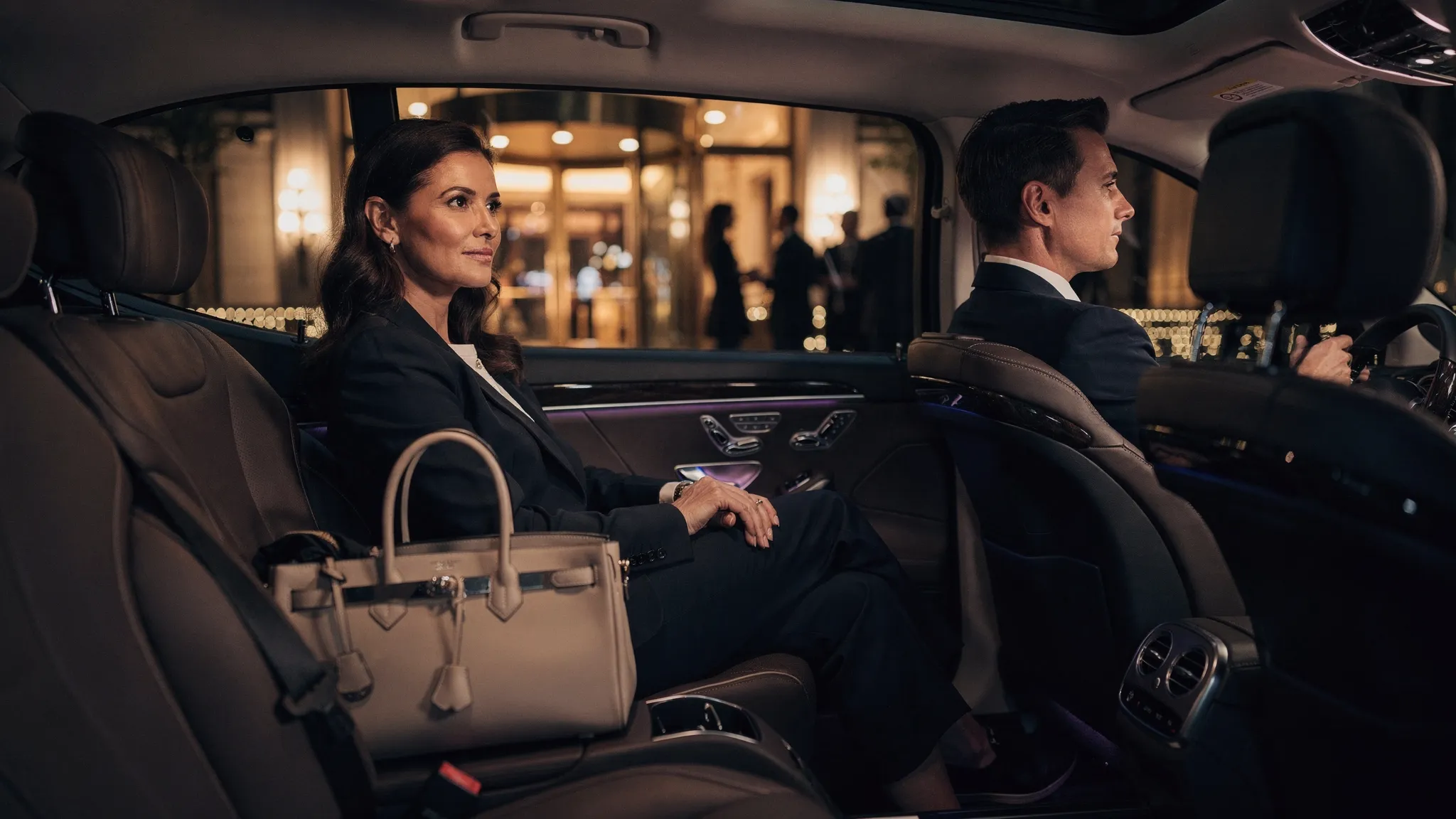
At a high-end event, mobility usually only becomes noticeable when something goes wrong. A keynote speaker arriving late, VIP guests searching for the correct pick-up point, or executives ending up in a chaotic departure flow after the event can immediately put pressure on the carefully built experience.
Good mobility planning prevents that. Not by simply booking cars and drivers, but by treating transport as an integral part of the guest journey. For event managers, executive secretariats and organisations with international guests, this means making choices in advance, limiting risks and ensuring a single clear line of command on the day itself.
The approach below helps you prepare high-end events in a structured way in 7 steps.
Why mobility planning is decisive at high-end events
At premium events, transport goes beyond punctuality. It is an extension of hospitality, safety, privacy and brand presentation. Arrival at the venue, the calm inside the car, the way a chauffeur communicates and the speed at which changes are processed all determine how professionally the event is experienced.
For a standard event, group transport or taxi transport may be sufficient. At high-end events, the bar is higher. Think of board dinners, international congresses, investor meetings, galas, sporting relationship events, product launches and events with artists, executives or other high-profile guests. In this context, mobility is not a separate facilities task, but an operational element that belongs early in the run sheet.
The key question is not only: how many cars are needed? The better question is: which movements must run flawlessly, for which guests, at what time and with what service level?
Step 1: define the event profile and risks
Start with the nature of the event. A private dinner with ten executives requires a different mobility plan than a congress with hundreds of international guests or a multi-day VIP programme around a sporting event.
Also consider the location, time of day, guest profile, privacy sensitivity, parking pressure, security, weather dependency and the presence of media or the public. An event in a city centre, for example, requires a different buffer plan than a gathering at an estate or circuit. A sporting or lifestyle-oriented event, where appearance and clothing concepts are also part of the experience, may place different demands on timing and reception. Think of premium sports- and casualwear partners such as Fabbrica Ski Sises, where the overall atmosphere has to work from arrival to departure.
Also determine at this stage what must absolutely not happen. Is delay unacceptable because a speaker has to go live on stage? Must a VIP be able to arrive unseen? Is there a tight connection with flights or hotel transfers? These risks determine the rest of the mobility plan.
Step 2: design the guest journey from door to door
Many event plans start with arrival at the venue. For mobility, that is too late. The guest journey starts the moment a guest receives the invitation and only ends when that guest has been safely returned to the hotel, office, airport or private address.
So map out the full journey for each guest group. Where does the ride start? Who receives the chauffeur details? Is a meet & greet required? Where may the car wait? How far is the walking distance from drop-off point to entrance? Who escorts the guest on arrival? And how is the return journey triggered when the programme overruns?
At high-end events, the transition between mobility and hospitality is especially important. A guest should not notice that different teams behind the scenes are responsible for invitations, security, location, drivers and event production. One aligned guest journey ensures that arrival, reception, stay and departure flow together logically.
Step 3: segment guests by service level
Not every guest needs the same type of transport. By creating guest categories in advance, you avoid both overcapacity and substandard service. This is also important for the quotation, because the desired service level directly affects vehicles, drivers, waiting times and overall coordination.
Guest category | Mobility need | Suitable approach |
|---|---|---|
Board and executive management | Discretion, reliability, minimal waiting time | Dedicated chauffeur, fixed pick-up, direct communication with the secretariat |
International VIPs | Meet & greet, language skills, flight monitoring | Premium vehicle, chauffeur providing a representative welcome, coordination with hotel or airport desk |
Keynote speakers and artists | Tight timing, backstage access, privacy | Pre-agreed run sheet, buffer car, direct line with event control |
Investors and relationships | Comfort, representative arrival, hospitality | Luxury saloon or MPV, clear reception instructions, calm departure procedure |
Event team and crew | Efficient movement, flexibility | Shuttle, coach, MPV or logistical transport with separate planning |
For the highest guest categories, VIP transport often fits better than standard passenger transport. If the focus is specifically on executives or board members, executive transport is usually the most suitable option, because of the emphasis on discretion, continuity and professional alignment with diaries.
Step 4: choose the right vehicle mix and routes
A luxury saloon may be perfect for one executive, but less suitable when a guest is travelling with an assistant, luggage and security. An MPV offers more space and comfort for small groups. For larger flows, shuttle transport may be needed, for example between hotel, station, parking location and event venue.
The vehicle mix should suit three things: the number of guests, the event's image and the operational reality on site. A high-end event in a historic city centre may, for example, work better with fewer vehicles and tightly planned time windows than with many cars arriving at the entrance at once. At venues with limited access routes, pre-positioning, meaning placing vehicles at strategic points in advance, is often more important than the number of cars available.
For full transport coordination around business and premium events, event transport is suitable. When guests prefer to be driven in their own vehicle, for example executives moving between multiple appointments, a chauffeur in their own car can be an efficient and discreet solution.
Step 5: create one communication and control protocol
Mobility planning stands or falls with communication. Not everyone needs to know everything, but everyone must know exactly what is relevant to their role. The chauffeur needs different information from the event manager, the security lead or the executive's personal assistant.
That is why you should work with one control point. This can be internal, for example within the event team, or external with a mobility partner. The most important thing is that changes do not get passed around through separate app groups, assistants, hosts and chauffeurs. At high-end events, fragmentation quickly leads to noise, duplicate instructions and misunderstandings.
A good control protocol includes agreements about names and phone numbers, pick-up locations, no-show procedures, changes in arrival times, escalation in the event of delays, contact with the venue and information security. Especially for VIPs and executives, passenger information should be shared in a limited, careful and strictly functional manner.
Step 6: build in buffers and back-up scenarios
A plan without buffers may look efficient on paper, but it is vulnerable in practice. Traffic, weather conditions, flight delays, dinners running over time, security checks and traffic congestion at departure can quickly disrupt a tight schedule.
Buffers must be designed deliberately. That does not mean every guest is picked up unnecessarily early, but that critical journeys receive extra margin. A speaker who has to be on stage at 19:00 deserves a different buffer from a guest who may arrive within a reception window. For international guests, linking to flight information and allowing time for luggage handling is essential. For this type of trip, professional airport transport is often a logical building block within the overall mobility plan.
Back-up scenarios go beyond keeping an extra car on standby. Think of alternative routes, secondary pick-up locations, extra drivers during peak windows, agreements with venue security and a plan for the controlled departure flow after the event. The departure moment in particular is often underestimated. When everyone wants to leave at the same time, the greatest pressure is placed on hosts, chauffeurs and venue traffic.
Step 7: make real-time adjustments on the event day
On the event day, the run sheet must not only be executed, but actively monitored. High-end mobility control means that someone continuously keeps an overview of arrivals, waiting times, delays, changes and departure flows.
The day itself calls for calm, businesslike decision-making. If a flight lands later, it must be clear which trips are shifted. If a dinner overruns, the departure schedule must be adjusted without guests having to wait outside. If a VIP unexpectedly wants to leave earlier, it must be known which chauffeur is available and where the car is located.
Afterwards comes evaluation. Which trips ran smoothly? Where did waiting time arise? Were the pick-up instructions clear enough? Did it often require ad hoc adjustments? This analysis makes future events better and helps to organise recurring VIP programmes or annual gatherings more efficiently.
Practical timeline for mobility planning
The ideal preparation time depends on scale, location and guest profile. The timeline below provides a workable guideline for high-end events where punctuality and presentation matter.
When | Focus | Concrete output |
|---|---|---|
8 to 12 weeks in advance | Mobility concept, venue analysis, guest profiles | Initial mobility plan and overall capacity estimate |
4 to 8 weeks in advance | Vehicle mix, service levels, routes, partner agreements | Draft run sheet and provisional schedule |
1 to 2 weeks in advance | Passenger lists, chauffeur briefing, buffers, communication | Final trip overview and control protocol |
Event day | Real-time monitoring, adjustments, departure control | Execution with a central point of contact |
Afterwards | Evaluation, cost control, improvement points | Report or learnings for future events |
For private dinners or smaller gatherings, the lead time can be shorter. For international events, congresses, sporting events or programmes with multiple locations, starting early is wiser. Not because everything is fixed months in advance, but because the right foundations have already been set.
What information is needed for an accurate quotation?
A good quote for high-end event mobility requires more than a date and a location. The more complete the briefing, the better a mobility partner can advise on capacity, service level and cost logic.
Preferably provide the following information:
Event date, times, location and any sub-locations.
Expected number of guests per category.
Arrival and departure windows.
Desired service level per guest group.
Hotel, airport, office and private addresses for relevant guests.
Flight details for international arrivals and departures.
On-site restrictions, such as parking, security, permits or backstage access.
Preferences for vehicles, chauffeur profile and communication lines.
Expected last-minute changes and desired flexibility.
This information makes it possible not only to reserve vehicles, but to build a realistic mobility plan. That is especially important when the event combines multiple guest flows, such as VIPs, executives, speakers, press, crew and suppliers.
Common mistakes in high-end event mobility
The first mistake is starting too late. Mobility then becomes a purchasing exercise instead of part of the event design. As a result, venue checks, good buffers and clear agreements with chauffeurs are missing.
The second mistake is choosing one transport solution for all guests. That may seem straightforward, but it often does not match the expectations of executives, international VIPs or speakers with a tight schedule. Segmentation prevents too much service being used where it is not needed and too little where it is crucial.
The third mistake is underestimating communication. A premium vehicle does not compensate for an unclear pick-up location or a chauffeur who receives new information too late. At high-end events, quiet coordination behind the scenes is just as important as presentation at the front.
Frequently asked questions
How early should I start mobility planning for a high-end event? For complex events, 8 to 12 weeks in advance is advisable. For smaller private events, it can be quicker, provided guest profiles, locations and service levels are clear. The earlier mobility becomes part of the run sheet, the fewer ad hoc solutions are needed.
What is the difference between event transport and VIP transport? Event transport focuses on the overall transport organisation around an event, including planning, vehicle mix, chauffeurs and control. VIP transport focuses specifically on guests who need extra discretion, comfort, flexibility and personal assistance.
Can a mobility plan absorb last-minute changes? Yes, provided flexibility is built in from the outset. That means clear communication lines, available back-up capacity, realistic buffers and one point of contact that can process changes without noise in execution.
Is a chauffeur in their own car suitable for events? It can be very suitable for executives, entrepreneurs or private guests who want to use their own vehicle but do not want to drive themselves. It offers comfort and discretion while preserving the appearance of the guest's own vehicle.
How is guest privacy safeguarded? Share only necessary information with chauffeurs and coordinators, work with clear authorisations and avoid distributing passenger lists through separate channels. Professional chauffeurs are used to handling names, routes, conversations and schedule information discreetly.
Outsource mobility planning to Stuur Chauffeurs
Organising a high-end event where transport must run flawlessly? Stuur Chauffeurs supports organisations with business mobility, executive transport, VIP transport and complete event control. Depending on your programme, this can include representative vehicles, a chauffeur in the guest's own car, shuttle solutions or a combination of these.
For clients, control is what matters most: one point of contact, proactive preparation, experienced chauffeurs and the ability to make last-minute adjustments when the programme changes. That keeps mobility in the background while your guests enjoy a calm and professional experience.
Would you like to know which approach suits your event? Discuss your programme with Stuur Chauffeurs or explore the options for a private chauffeur, VIP programme or complete event mobility. You can also call directly on 010 307 4525 for a tailored proposal.


Let us help you think about your mobility.
An informal consultation. We listen, analyse, and present a proposal that suits your situation.