
Why having a single point of contact is crucial for event transport
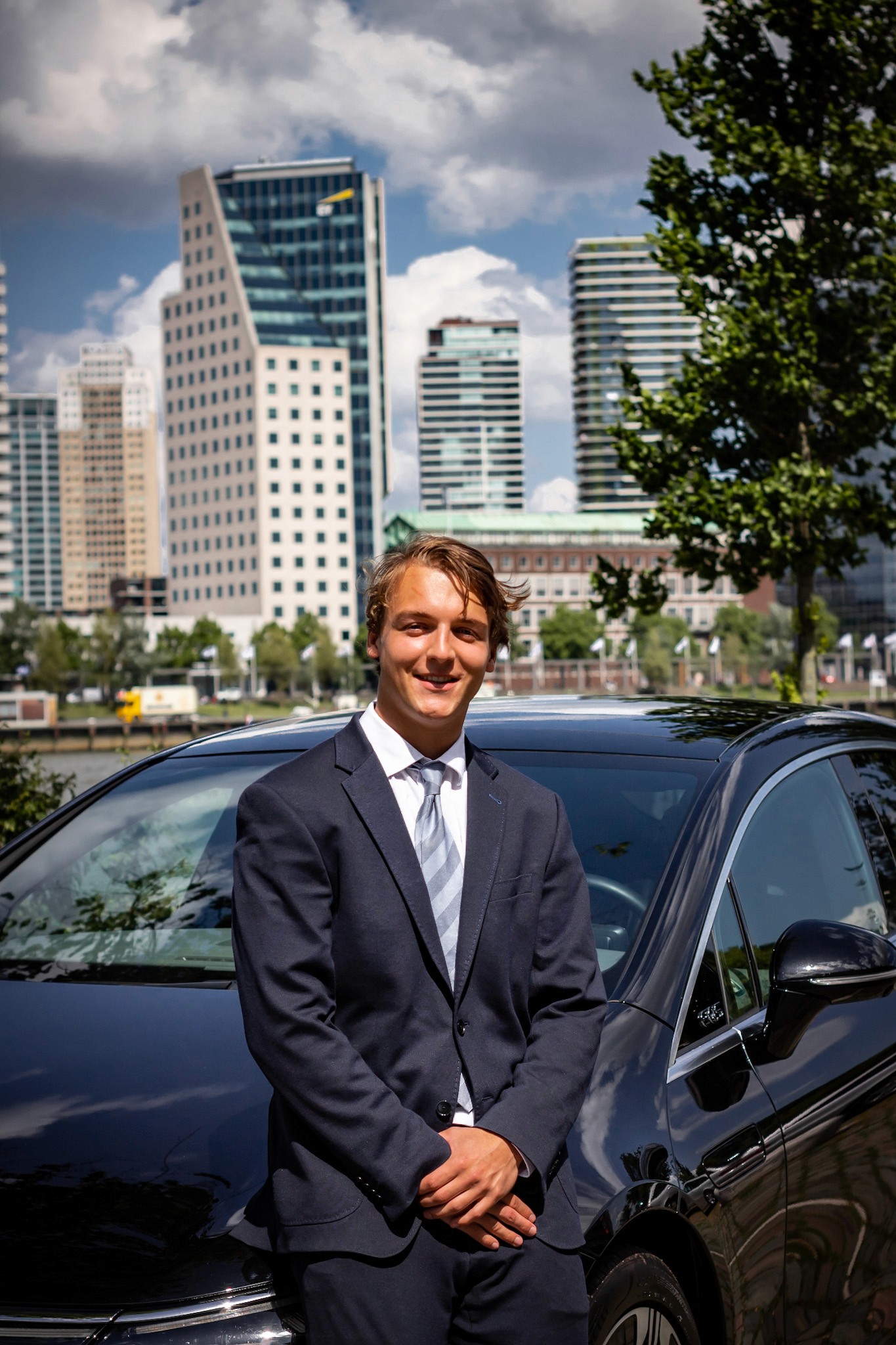
At high-end events, transport is not a separate facilities task. It is part of the overall guest experience, the programme planning and the organisation's reputation. A speaker who arrives late, a VIP waiting at the wrong entrance, or a board member who has to wait for a driver can immediately disrupt the calm around an event.
That is precisely why a single point of contact for event transport is crucial. Not because communication then appears simpler, but because decision-making, information and responsibility come together in one place. For event managers, executive secretariats and organisations with international guests, that makes the difference between transport that is “sorted” and transport that is professionally directed.
Event transport requires more than drivers and vehicles
In business event transport, several interests are often at play at the same time. The event manager safeguards the programme, security looks at access and safety, hotels communicate about check-in and departure, the secretariat protects the agenda of board members, and the drivers must know exactly where, when and how they should act.
When all these parties start liaising directly with one another, confusion quickly arises. One person sends an updated guest list, another adjusts the arrival time and a third changes the pick-up location. If nobody is ultimately responsible for the current version of the truth, confusion arises at exactly the moment when speed is needed.
In professional event transport, it is therefore all about central control. The cars and drivers are visible to the guest, but the quality is largely determined by what happens behind the scenes: planning, briefing, monitoring, escalation and continuous coordination.
What does a single point of contact mean in practice?
A single point of contact is more than a phone number in the run sheet. It is the person or team that maintains the full overview and is authorised to make decisions. This point of contact knows the planning, the priorities, the guest categories, the driver deployment and the possible risks.
In practice, this central point acts as a filter and director. Not every change needs to go straight to everyone involved. The point of contact assesses what is relevant, translates changes into concrete instructions and ensures that the right people are informed at the right time.
Phase | Role of the point of contact | Practical result |
|---|---|---|
Preparation | Intake, guest allocation, route planning, driver briefing | Less uncertainty before event day |
Event day | Real-time coordination, processing changes, handling escalations | Faster decision-making and less operational stress |
Departure phase | Monitoring return flows, waiting times, priorities and VIP guidance | Controlled departure without unnecessary delay |
Evaluation | Discuss trip data, improvement points and cost logic | Better planning for future events |
For high-end transport, this is especially important because small deviations can have major consequences. A speaker who leaves five minutes later may miss a stage appearance. An international guest who is not properly welcomed at the airport immediately gets a less professional impression of the organisation.
The risks of fragmented communication
A lot of event transport goes wrong not because of a lack of effort, but because there are too many separate links in the chain. Everyone is doing their best, but nobody has the full picture. That problem grows as the event becomes more complex: multiple hotels, different arrival times, VIPs, international flights, secure locations, private dinners or programme items that overrun.
Typical risks of fragmented communication are:
Drivers receive outdated pick-up times or addresses.
Guest lists differ between the event team, hotel and transport partner.
Last-minute changes are reported, but not to the right person.
Nobody knows who gets priority when vehicle capacity is limited.
Waiting times increase because vehicles are not positioned intelligently.
Confidential information about board members or VIPs is shared more widely than necessary.
These risks are not only a logistical nuisance. They also affect image, security and trust. Especially with VIP transport, executive programmes and international gatherings, guests expect the transport to be correct as a matter of course. They do not want to notice how many parties are involved behind the scenes.
A single point of contact protects the guest journey
The guest journey often does not begin at the registration desk, but with the first transport movement. For an international speaker, that could be arrival at Schiphol. For a board member, it may be the journey from the office to a private dinner. For a VIP guest, it may be the handover between the hotel, backstage entrance and departure afterwards.
A central point of contact oversees that journey as a whole. That means the transport matches the tone of the event. A substantive board meeting requires calm, discretion and minimal interaction. A product launch with international guests calls for a clear welcome, recognisable guidance and tight timing. A multi-day congress requires continuity and repeatable processes.
The value lies in the coherence. The driver knows whom they are transporting, where the guest needs to be, which entrance is appropriate and whether there are any special considerations. The event manager does not have to coordinate with ten drivers or suppliers at once. The guest experiences a smooth transition from arrival to programme.
Faster switching when there are last-minute changes
No event runs exactly to plan. Flights are delayed, dinners overrun, speakers change order, security adjusts an access point or a board member wants to leave earlier. The question is not whether changes will occur, but how quickly and controlled you can respond to them.
With a single point of contact, there is a clear escalation line. The event team reports the change in one place. The point of contact assesses the impact and adjusts drivers, vehicles and any hosts if necessary. This keeps the communication organised, even when several changes happen at the same time.
Suppose a keynote speaker lands later than planned, while the scheduled journey is due to continue straight on to a dinner with executives. Without central control, this creates separate phone calls between the travel desk, driver, hotel, event manager and possibly the speaker themselves. With one point of contact, the flight information is processed, the driver is re-instructed, the arrival location is aligned and the onward trip is adjusted. The event team receives one clear update instead of a string of separate messages.
For airport flows, that control is especially important. Professional airport transport requires monitoring, timing and clear agreements about meet & greet, luggage, waiting time and any delays.
Discretion and information security become more manageable
In event transport for executives, speakers and VIPs, the information is often sensitive. Think of the names of board members, hotel addresses, private phone numbers, flight schedules, security instructions or programme items that have not yet been made public. The more separate links have access to that information, the greater the risk of mistakes or unwanted sharing.
A single point of contact makes it easier to limit information to what is necessary. Drivers receive only the relevant instructions for their trip. The event team does not have to keep sharing personal data with different parties. Changes are handled via a controlled line.
That fits the standard expected of premium business mobility. A professional driver is discreet in behaviour, communication and presence. But discretion starts in the preparation: who receives which information, via which channel and for what purpose?
Better coordination between executive transport, VIP transport and group flows
Many business events combine different transport levels. Board members have their own schedule, speakers are escorted from the airport or hotel, VIPs receive representative transport and larger groups use shuttles or coaches. If these transport flows are organised separately from one another, they can get in each other's way.
A single point of contact looks at the whole picture. Which vehicles need to be close to the main entrance? Which guests use a discreet entrance? Where will peak pressure arise after the event? Which trips must never be delayed? Which cars can be redeployed after a drop-off?
For organisations that, alongside event transport, also use structured executive transport, that coherence is especially valuable. Expectations around punctuality, calm and confidentiality are already high. During an event, those standards must be maintained despite the extra busyness.
A combination with a chauffeur in your own car can also be appropriate. For example, when a board member wants to travel in their own representative car, but does not want to drive themselves between locations, dinners and late programme items.
The point of contact as translator between strategy and execution
Event transport touches on strategy, hospitality and operations. At strategic level, you decide which guests have priority, which image is desired and what level of risk is acceptable. At operational level, drivers need to know where to stand, whom they are collecting, how to communicate and what to do in the event of deviations.
The point of contact translates those strategic choices into executable instructions. That requires experience with mobility, but also an understanding of business etiquette. A driver does not need to know every internal consideration, but they do need to know exactly what behaviour suits the guest and the context.
The quality of the event team also plays a part in this. Organisations that work a lot with international guests, technology and complex programmes are increasingly investing in the professional development of their teams. Platforms for continuous development of event teams can help with that, for example around business skills and digital collaboration. During delivery, however, one central mobility coordinator is still needed to turn knowledge into precise action on the day itself.
What information does the central point of contact need?
A point of contact can only steer well if the basic information is correct. The earlier that information is available, the better the planning can be set up. That does not mean everything must be final weeks in advance. It does mean that the assumptions, priorities and risks must be clear.
Important information for professional event transport includes:
Date, locations, programme times and expected peak moments.
Number of guests, guest categories and desired service levels.
Arrival and departure locations, including hotels, airports and private addresses.
Flight numbers, train times or other relevant travel details.
Security instructions, protocols and access points.
Preferred vehicle types and any driver preferences.
Client-side contacts, including decision-making authority on event day.
This information forms the basis for a realistic transport plan. It prevents drivers from having to improvise with incomplete instructions on the day itself. Improvisation is sometimes still necessary, but only within a pre-thought-out framework.
When is a single point of contact indispensable?
For small, straightforward journeys, direct communication with a driver may be sufficient. But as soon as the importance, complexity or visibility increases, central control is sensible. Especially for business events where delay or uncertainty can damage reputation.
Situation | Why one point of contact is essential |
|---|---|
International conference | Flights, hotels, speakers and programmes must align |
Board meeting or executive dinner | Discretion, waiting times and late changes require control |
Product launch or client event | The arrival experience directly influences brand perception |
Sports or entertainment event | Crowds, traffic measures and peak moments require real-time direction |
Multi-day programme | Continuity and recognisable service are important for returning guests |
In all these situations, someone has to keep the overview. Not only in advance, but especially during the event itself. That is where the real value of a mobility partner emerges.
What should you look for when choosing a mobility partner?
A professional partner for event transport does not just provide vehicles and drivers. The partner must be able to think along on planning, risks, guest flows and communication. So ask not only about availability and rates, but also about how the control is organised.
Pay particular attention to the following points:
Is there one clear point of contact before and during the event?
Are drivers briefed in advance on guest profile, route and conduct?
Is there room for last-minute adjustments without communication becoming fragmented?
Are backup scenarios discussed for delays, overruns and no-shows?
Is there experience with executive, VIP and event mobility?
Does the appearance of drivers and vehicles match the level of your event?
Stuur Chauffeurs works for business clients with bespoke solutions for event transport, executive transport, VIP transport and private driver services. The emphasis is on reliable execution, discreet drivers, clear communication and a fixed point of contact that monitors the mobility around your programme.
Frequently asked questions about a single point of contact in event transport
Why is one point of contact better than direct contact with all drivers? Because the overview remains central. Drivers need clear instructions, but the event team needs one control line for changes, priorities and escalations. This prevents contradictory information.
Is one point of contact also needed for smaller business events? Not always, but yes when punctuality, discretion or guest experience matters. Think of board dinners, VIP receptions, international speakers or programmes with multiple locations.
Who should be the point of contact: someone internal or the transport partner? That depends on the organisation. Often a combination works best: one internal decision-maker and one operational point of contact at the mobility partner. That keeps responsibility and execution clearly separated.
Can a central point of contact also handle last-minute changes? Yes, provided it is clear in advance who may make decisions and via which channel changes are communicated. A good mobility partner takes overruns, delays and changing priorities into account.
What makes event transport different from regular business transport? Event transport more often involves peak moments, multiple guest groups, changing locations and visible reputational risks. As a result, planning, communication and real-time coordination are at least as important as the journey itself.
Organising event transport with central control
Would you like to organise transport for executives, VIPs, speakers or guests without fragmented communication? Then a professional transport plan starts with one clear point of contact, a clear run sheet and drivers who understand what is at stake.
Stuur Chauffeurs supports organisations with bespoke event transport and mobility management. From preparation and driver briefing to real-time adjustments on event day. Request a no-obligation proposal and discuss which transport solution suits your programme, guests and desired service level.


Let us help you think about your mobility.
An informal consultation. We listen, analyse, and present a proposal that suits your situation.