
Choosing a passenger transport driver? Ask these questions first
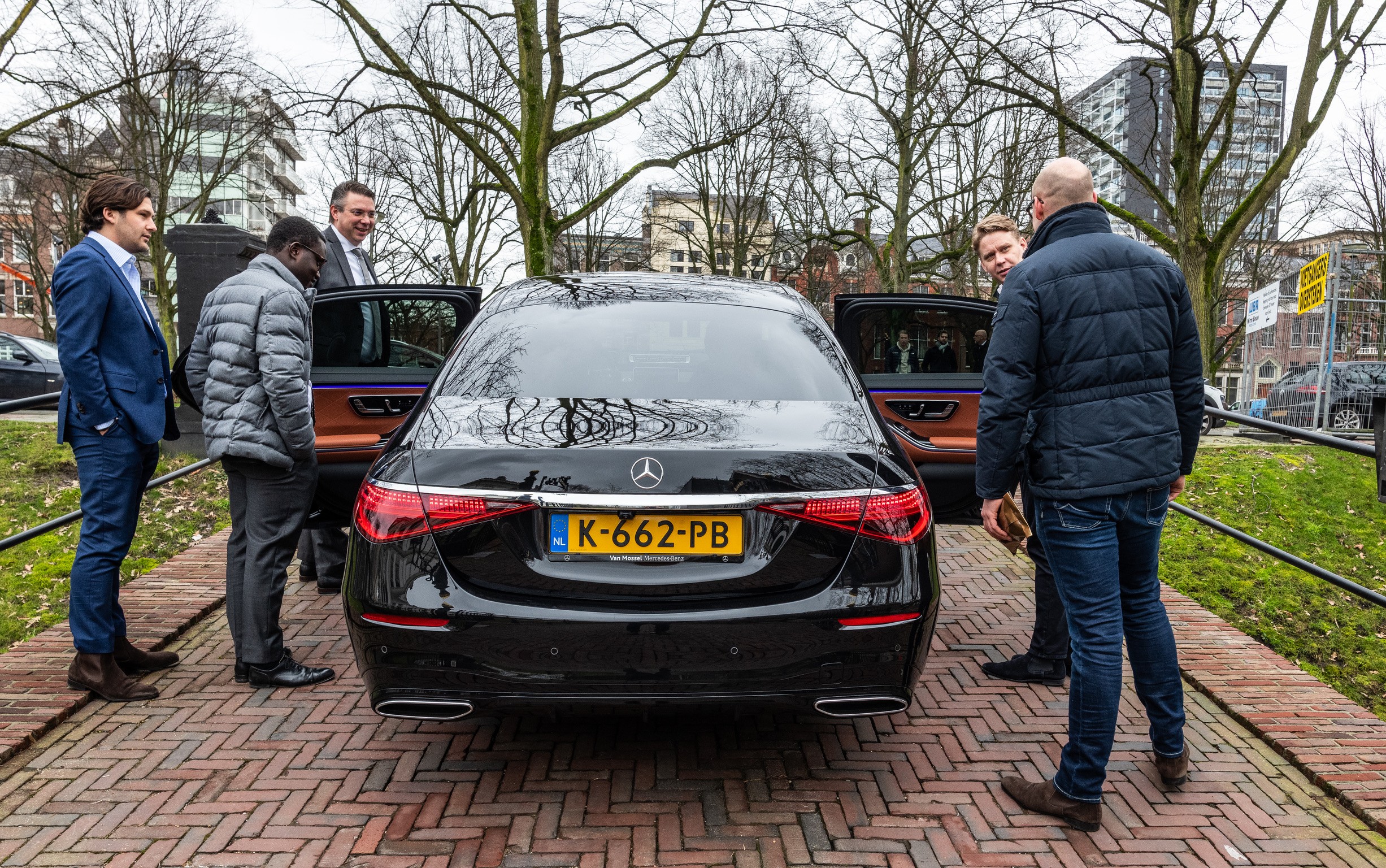
You do not choose a passenger transport chauffeur solely on availability or price. Certainly not when it concerns executives, international guests, VIPs, families, investors or event visitors for whom punctuality, discretion and comfort must be a given. The right chauffeur prevents disruption, keeps the schedule on track and ensures transport matches the image of your organisation.
Those who ask the right questions in advance get a better quotation, fewer surprises and a service provider who understands what is at stake. The questions below help you assess professional passenger transport sharply, whether you are planning one important journey, looking for a regular chauffeur or want to organise complete event mobility.
Why choosing passenger transport is about more than “from A to B”
With premium passenger transport, it is not just about driving. It is about predictability, preparation and the ability to stay calm when the schedule changes. A flight is delayed, a meeting runs over, a guest exits through a different entrance or traffic builds up around a venue. That is when you immediately notice the difference between a chauffeur and a professionally organised chauffeur service.
For executives and business owners, good chauffeur-driven passenger transport means travel time becomes useful time. For event managers, it means arrival flows, waiting times and VIP experience remain under control. For private high-end clients, it means comfort, safety and discretion without having to arrange anything themselves.
Question 1: What must absolutely not go wrong?
Do not start with the car, but with the risk. Which journey is critical? What happens if the passenger arrives late? How sensitive is the information being discussed on the way? Is there public visibility, media attention or a tight security context?
An executive journey to a shareholders’ meeting calls for something different from transport after dinner. A transfer for an international speaker requires something different from shuttle transport for hundreds of event guests. By first identifying what must not go wrong, the provider can give better advice on planning, chauffeur selection, vehicle type, back-up and communication.
So ask yourself this key question: are you buying a journey, or are you buying certainty? For many business clients, the latter is decisive.
Question 2: What type of chauffeur service suits the situation?
Not every request calls for the same form of passenger transport. Sometimes a private chauffeur in your own car is the most efficient choice. In other cases, a luxury vehicle with chauffeur is more suitable. For events, transport management may be more important than the individual journey.
Situation | Possible solution | Main point of attention |
|---|---|---|
Executive management or board of directors | Executive chauffeur with fixed schedule | Discretion, continuity and representativeness |
Busy business day with multiple appointments | Chauffeur in your own car | Flexibility, route preparation and waiting time |
VIP reception or international guest | Luxury car with professional chauffeur | Meet & greet, language, appearance and timing |
Business event | Shuttle transport or full transport coordination | Inflow, peak times, walking routes and back-up |
Private high-end occasion | Private chauffeur or premium vehicle | Comfort, privacy and smooth coordination |
Are you unsure whether business transport or a personal chauffeur is the better fit? The article on when you choose a private chauffeur helps make that decision more concrete.
Question 3: What requirements do you place on the chauffeur themselves?
The chauffeur is the face of the service. That requires more than driving experience. Pay attention to attitude, discretion, language use, stress resistance, navigation skills and a sense of proportion. A good chauffeur knows when to be present and when not to be.
Ask a potential provider how chauffeurs are selected and briefed. Do they work with experienced and screened chauffeurs? Is a regular pool possible for returning passengers? Which certifications are relevant for executive transport? And how is it ensured that the chauffeur matches the type of client, the occasion and the desired manner of interaction?
For executives and board members, continuity is often important. A chauffeur who knows the passenger’s preferences, routes and communication style brings peace of mind. You can read more about this in the article on what an executive chauffeur adds to business mobility.
Question 4: How is discretion organised?
Discretion is not a stand-alone promise, but a way of working. The chauffeur may overhear conversations, see documents, know schedules and know where someone is at what time. That requires clear agreements on confidentiality, information use and communication.
So discuss in advance how the provider handles passenger data, journey information, guest lists and sensitive changes. Who receives which information? How are journey details shared? Are chauffeurs instructed on confidentiality? And what happens to data after an event or project?
For high-end passenger transport, discretion is just as important as comfort. A calm driving style, the correct form of address and a restrained presence largely determine the experience.
Question 5: How solid is the planning when your schedule changes?
In practice, a schedule almost always changes. So the question is not whether changes will come, but how the provider responds to them. A professional partner thinks ahead, builds in buffers where needed and has a contact person who can adjust the operation.
Watch for the following signs: does the provider ask about flight numbers, meeting times, alternative entrances, parking restrictions, security requirements and on-site contacts? Is there advance thinking about peak moments, delays and emergency scenarios? Is someone reachable during delivery?
For large-scale or international events, passenger transport often connects with hospitality, security, venue planning and freight flows. Coordinate transport with all operational parties, for example also with a freight forwarding and 3PL partner when logistics and guest flows run in parallel.
You can clearly see the value of preparation in complex event mobility. The case on Formula One Limited shows how planning, flexibility and 24/7 coordination are essential when routes, peak times and arrivals can change continuously.
Question 6: Do you choose your own car or a vehicle from the provider?
A chauffeur in your own car can be ideal when you like to travel in your familiar vehicle, for example during business days with multiple appointments. You keep your own environment, documents and comfort settings, while the chauffeur takes care of route, safety and punctuality.
A vehicle from the provider is more suitable when appearance, comfort or capacity matter. Think of executive transport, VIP transfer, airport transport, roadshows or transport for foreign guests. In that case, it is important that the vehicle matches the status of the occasion and offers sufficient space for passengers, luggage and any security requirements.
In both cases, ask about the practical terms. Who is responsible for parking, charging electric vehicles, cleaning, waiting times and any replacement vehicles? Clear agreements prevent discussion afterwards.
Question 7: What does the communication look like before, during and after the journey?
Premium transport stands or falls with clear communication. The passenger should know what to expect, without being unnecessarily burdened with operational details. The client, meanwhile, wants enough insight to be sure everything is going smoothly.
So ask how journey information is confirmed, how changes are communicated and who is reachable during the operation. For VIP transport, it may be desirable to share chauffeur details in advance. For events, real-time coordination is often more important, because multiple vehicles, pick-up points and time windows come together.
Aftercare matters too. A short evaluation after an important journey, board day or event helps make the service even sharper for follow-up assignments.
Question 8: What exactly is included in the quotation?
A good quotation for chauffeur-driven passenger transport is transparent. Not only the hourly rate or journey price is relevant, but also what is and is not included. Uncertainty about waiting time, parking hours, night supplements or last-minute changes can cause friction later.
Element | Question you should ask |
|---|---|
Chauffeur hours | From what moment does the assignment start and end? |
Waiting time | How is waiting during appointments or events calculated? |
Vehicle | Which type of car is included and what are the alternatives? |
Mileage and parking | Are mileage, parking costs and any tolls included? |
Changes | How flexible is the schedule in the event of overruns or extra stops? |
Coordination | Is a fixed contact person or operational coordination included? |
Cancellation | What conditions apply in the event of changes or cancellation? |
The lowest price is not automatically the best choice. Especially for executive transport, VIP transport and events, it is wiser to look at overall reliability, the quality of the chauffeur, the degree of coordination and the ability to prevent problems.
Question 9: Does the provider have experience with similar assignments?
Experience is especially relevant when your situation is operationally critical. Ask about similar assignments, without confidential customer information having to be shared. Does the provider have experience with executive transport for large organisations? With international guests? With busy event venues? With transport that needs to scale up or, on the contrary, remain discreet in the background?
Cases often give a good picture of the working method. For example, the case on scalable mobility for Unilever shows how an on-demand model with a fixed pool of chauffeurs can contribute to continuity and efficiency. For event managers, the case on the Achmea Staff Festival is relevant, because it focuses on transport coordination for thousands of employees.
Common mistakes when choosing passenger transport
A common mistake is booking too late. That leaves less time for briefing, route checks, vehicle selection and coordination with venues. For important journeys, preparation is exactly what makes the difference between transport that works and transport that causes stress.
A second mistake is focusing only on price. That may seem logical for simple journeys, but in business or high-end situations, reliability, discretion and flexibility are often more valuable than a small price difference.
A third mistake is sharing too little information. A professional provider does not need to know everything, but does need enough to organise the journey properly. Think of the purpose of the journey, the sensitivity of the appointment, the desired service level, contacts, luggage, security requirements and possible changes.
When does Stuur Chauffeurs suit your request?
Stuur Chauffeurs is especially suitable when mobility cannot fail. Think of executive transport, business journeys, personal chauffeur services, VIP transport and event transport where coordination, discretion and quality matter. The service can be tailored to the situation, with attention to planning, experienced chauffeurs, a suitable vehicle and a fixed contact person.
For events, it is wise to include passenger transport in the running order at an early stage. The article on using shuttle chauffeurs for events shows which building blocks are needed to organise arrival, flow and departure professionally.
Frequently asked questions
What is the difference between chauffeur-driven passenger transport and a taxi? A taxi is usually geared towards a single journey. Chauffeur-driven passenger transport is broader and may include executive transport, VIP transport, a private chauffeur in your own car or full transport coordination. The emphasis is more on preparation, discretion, comfort and continuity.
Can I book a chauffeur for my own car? Yes, in many situations that can be a logical choice. It is especially practical when you want to travel in your own vehicle, but do not want to drive yourself during busy business days, dinners, events or long journeys.
How far in advance should I request professional passenger transport? For a single journey, arrangements can often be made more quickly, but for executive transport, VIP reception or events, early coordination is wise. That leaves sufficient time for planning, briefing, vehicle selection and any back-up scenarios.
What should I look out for with VIP transport? Look at discretion, representativeness, vehicle quality, communication, flexibility in the event of delays and the chauffeur’s experience with high-end guests. The reception should be calm, correct and predictable.
Is chauffeur-driven passenger transport only suitable for business clients? No. Private clients can also use a chauffeur for private occasions, dinners, airport transfers, recovery periods or days when comfort and safety are important.
Request a quotation for suitable passenger transport
Would you like to know which solution suits your schedule, organisation or event? Put your transport request to Stuur Chauffeurs. Based on your planning, passengers, desired appearance and flexibility, you will receive a proposal that fits practice.
Request a no-obligation quotation via Stuur Chauffeurs and discuss which form of professional passenger transport best suits your situation.


Let us help you think about your mobility.
An informal consultation. We listen, analyse, and present a proposal that suits your situation.