
Private transport for executives and guests, impeccably organised
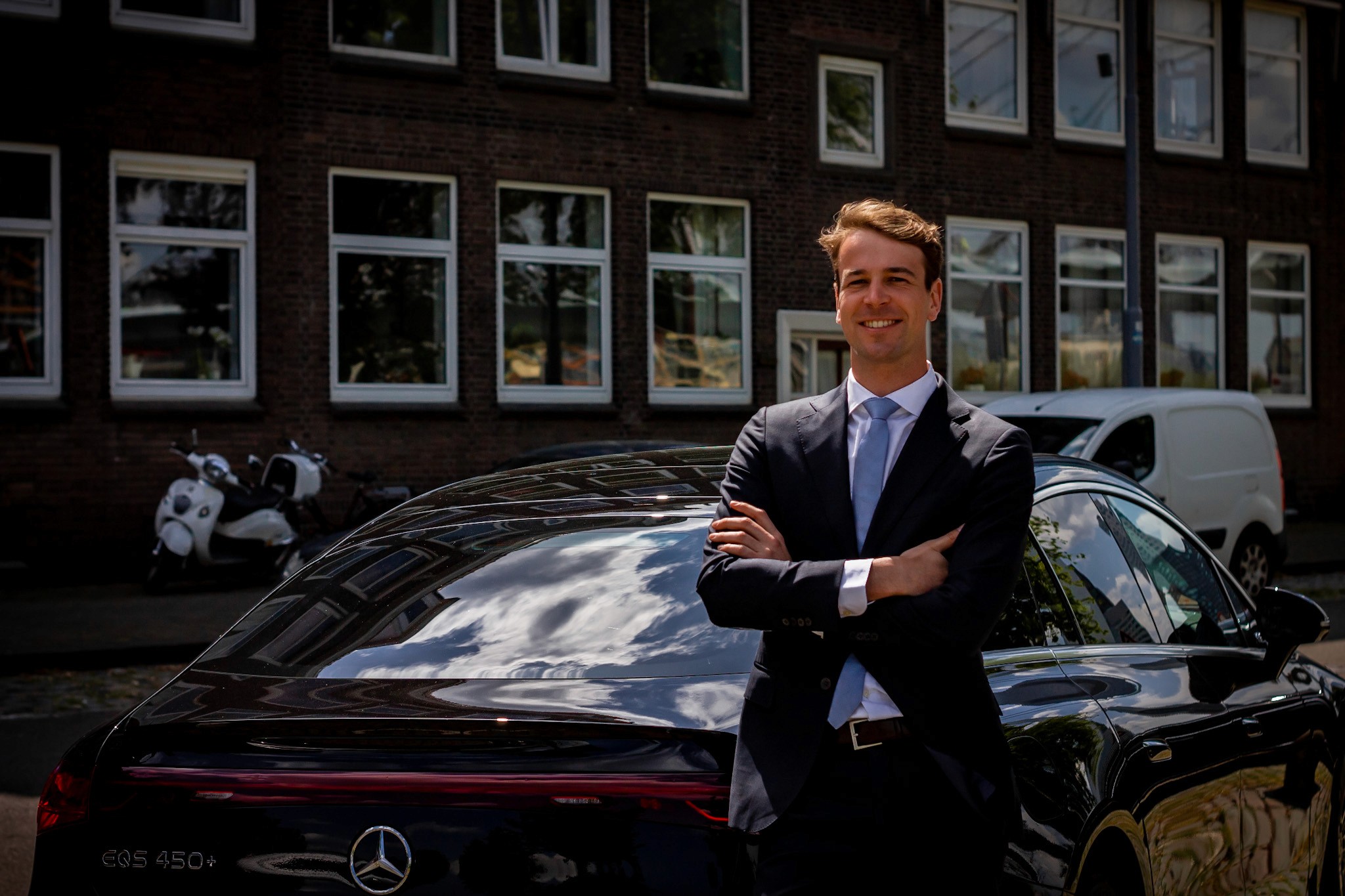
Private transport for executives and guests seems straightforward until something goes wrong: a flight that lands early, a meeting that overruns, a VIP who does not want to use the main entrance, or an event venue where traffic grinds to a halt. In organisations where reputation, security and timing matter, transport is not a “ride”, but part of the overall coordination.
In this article, you will learn how to organise private transport for executives and guests tightly: from intake and planning to chauffeur selection, back-up scenarios and clear communication with office management, security and event teams.
What does “well organised” mean in private transport?
Tightly organised private transport is predictable for the passenger and manageable for your organisation. That requires more than a smart car.
Features that make the difference in practice:
One point of coordination: one contact person who handles planning, changes and escalations.
Proactive coordination: gather flight details, locations, access procedures, contacts and preferences in advance.
Discretion and privacy by design: share minimal information, only with those who need it.
Continuity: a fixed pool of chauffeurs and back-up deployment in case of illness, overruns or peaks.
Guest experience: meet & greet, clear instructions, no time spent searching.
If you set this up properly, you prevent not only delays, but also “invisible friction”: unclear pick-up points, last-minute stress for PAs, and reputational risk when welcoming VIPs.
Typical situations: executives, VIPs and guests
Tightly organised private transport often comes back in these scenarios:
Executive transport: multiple appointments in one day, tight schedules, preparation time in the car.
Guest programmes: investors, board members, speakers or international delegations.
Events: parallel arrival waves, multiple hotels, limited time windows, venue restrictions.
Confidential appointments: discreet pick-up, alternative entrances, coordination with security.
Hybrid model: partly transport in the executive’s own car, partly in representative vehicles.
If you mainly want to understand when a private chauffeur is appropriate (including private in your own car), read: When do you choose a private chauffeur?
The blueprint: how to organise private transport without surprises
1) Intake: what really needs to be right?
A good transport partner starts by capturing the conditions, not by “booking rides”. Think about:
Which people: executives, guests, family office, speakers.
Service level: meet & greet, door-to-door, luggage, waiting time.
Communication lines: who may make changes, who approves.
Security: protocols, access rights, alternative routes.
Vehicle preferences: saloon, MPV, electric, extra space.
Practical tip: record a short “passenger note” for each VIP (preferred route, silence, temperature, water, whether to chat or not). That keeps the service consistent without having to coordinate afresh each time.
2) Planning: rides are the result, not the starting point
Tight organisation means you plan from the objective first (on time, discreet, comfortable) and only then fill in the journeys.
Important building blocks:
Buffer policy: standard margin for traffic, security checks and venue access.
Pick-up points: exact, including terminal exit, hotel entrance or backstage gate.
Window planning: arrival slots for multiple guests, including spacing.
Alternatives: second-best routes, fallback locations, reserve chauffeur.
For event mobility, this is even more critical, because peaks are predictable but traffic is not. For inspiration on what full transport coordination looks like at scale: Achmea staff festival.
3) Chauffeurs: presentation is a basic requirement, not the USP
For executives and VIPs, what matters most is: safe, predictable, discreet, punctual. When selecting, pay attention to:
Experience with executive and VIP journeys
Screening and clear behavioural rules
Professional communication (brief, clear, guest-focused)
Driving style: defensive, comfortable, no “sense of rush”
More context about the profession and the tasks in practice: What exactly does an executive chauffeur do?
4) Vehicles: choose by function, not by appearance alone
A luxury saloon is not automatically the best choice. For a delegation with hand luggage, an MPV is often more efficient; for a board member, a quiet saloon may be preferred.
Useful overview for considerations by ride type: The top 10 cars for professional chauffeur services
5) Day-of operations: one channel, one truth
On the day itself, you do not want stray messages in five group chats. Work with central coordination (internally or via your partner) and one update channel for those involved.
A compact operational format that often works:
Component | What is recorded | Why it matters |
|---|---|---|
Contact matrix | Who calls whom (chauffeur, PA, security, event) | Prevents noise and duplicate work |
Pick-up instructions | Exact location + point of reference | No searching on arrival |
Change procedure | Who may make changes + cut-off times | Prevents miscommunication |
Back-up scenario | Reserve chauffeur or reserve vehicle | Continuity in case of overruns or disruption |
Reporting | Journey status, no-shows, waiting time | Evaluation and improvement |
Private transport with your own car or with the transport partner's car?
Both models are common. The choice depends on continuity, image, practical deployment and risks.
Option | Works well when | Point of attention |
|---|---|---|
Chauffeur in your own car | Executives want to travel in their own vehicle, fixed settings, recognisability | Planning around the vehicle's availability |
Vehicle from the transport partner | You want scalability, a representative fleet, easier back-up | Coordination on model, specifications and desired look |
In many organisations, the best solution is a combination: fixed executive journeys in their own car, guests and peak times via additional vehicles.
Discretion, privacy and information security: make it concrete
For executives and VIPs, it is not only about comfort, but also about information. Think about addresses, diaries, names, flight numbers and sometimes medical or security context.
Therefore, agree in advance on:
Which data the chauffeur receives (and when)
How data are shared (preferably minimal and purpose-driven)
How long data are retained
NDA or similar agreements within the partnership
For the legal context regarding personal data, you can consult the guidelines of the Dutch Data Protection Authority.
What you may expect from a partner for tightly organised private transport
If you outsource private transport, you do not want a “ride provider” but a partner who can take the lead. In quotes and conversations, look for these points:
Fixed contact person (operationally and for escalations)
Proactive planning and thinking ahead about peaks and day programmes
Flexibility for last-minute changes, also outside office hours
Fixed pool of chauffeurs for recognisability and quality
Clear agreements on service levels (waiting time, meet & greet, communication)
In practice you see this reflected in long-term partnerships and scalable models, for example in executive transport where continuity is essential. If desired, view an example: Unilever (scalable mobility).
For organisations where premium executive transport must additionally be sustainable and suitable for tendering, this case is relevant: Executive transport Erasmus MC (tender won).
For high-pressure event environments with live changes and peak moments, this is a good reference point: Formula One Limited.
Common mistakes (and how to avoid them)
Most problems do not arise on the road, but in preparation.
Starting coordination too late: transport is only discussed once the programme is already “fixed”. Solution: plan transport in parallel with the agenda and security.
No owner for changes: everyone may change things, no one is ultimately responsible. Solution: change rights and one coordination point.
Insufficient detail in pick-up instructions: “Schiphol arrivals hall” is not a location. Solution: terminal, exit, landmark, time window.
No back-up: one chauffeur, one car, no alternative. Solution: reserve chauffeur or stand-by scenario.
FAQ
What is the difference between private transport and a taxi for executives and guests? Private transport is about coordination and service levels: fixed chauffeurs, proactive planning, meet & greet, discretion and back-up arrangements. A taxi is usually ad hoc and less predictable in execution.
Can we organise private transport with chauffeurs in our own car? Yes, that is common for executives. What matters is that you make arrangements about availability, planning, vehicle checks and who passes on changes.
How does tightly organised private transport handle last-minute changes? With a fixed contact line, clear change procedure and a plan for scalability (extra chauffeur/vehicle). That keeps the programme manageable, even in case of overruns or flight changes.
Is private transport also suitable for events with multiple guests and locations? Yes, provided there is central coordination, with clear pick-up points, window planning and reporting. For larger events, transport coordination is often a project in its own right.
What information does a chauffeur need at minimum? Usually: name, pick-up location, time window, contact person and any access instructions. Share extra details only if it is functional, in line with GDPR principles.
Request a quote for private transport that is right
Would you like to have private transport for executives and guests organised tightly, with one point of contact, proactive planning and an execution that matches your image? Get in touch for a tailor-made proposal via Stuur Chauffeurs.


Let us help you think about your mobility.
An informal consultation. We listen, analyse, and present a proposal that suits your situation.