
Book a shuttle driver for events without logistical hassle
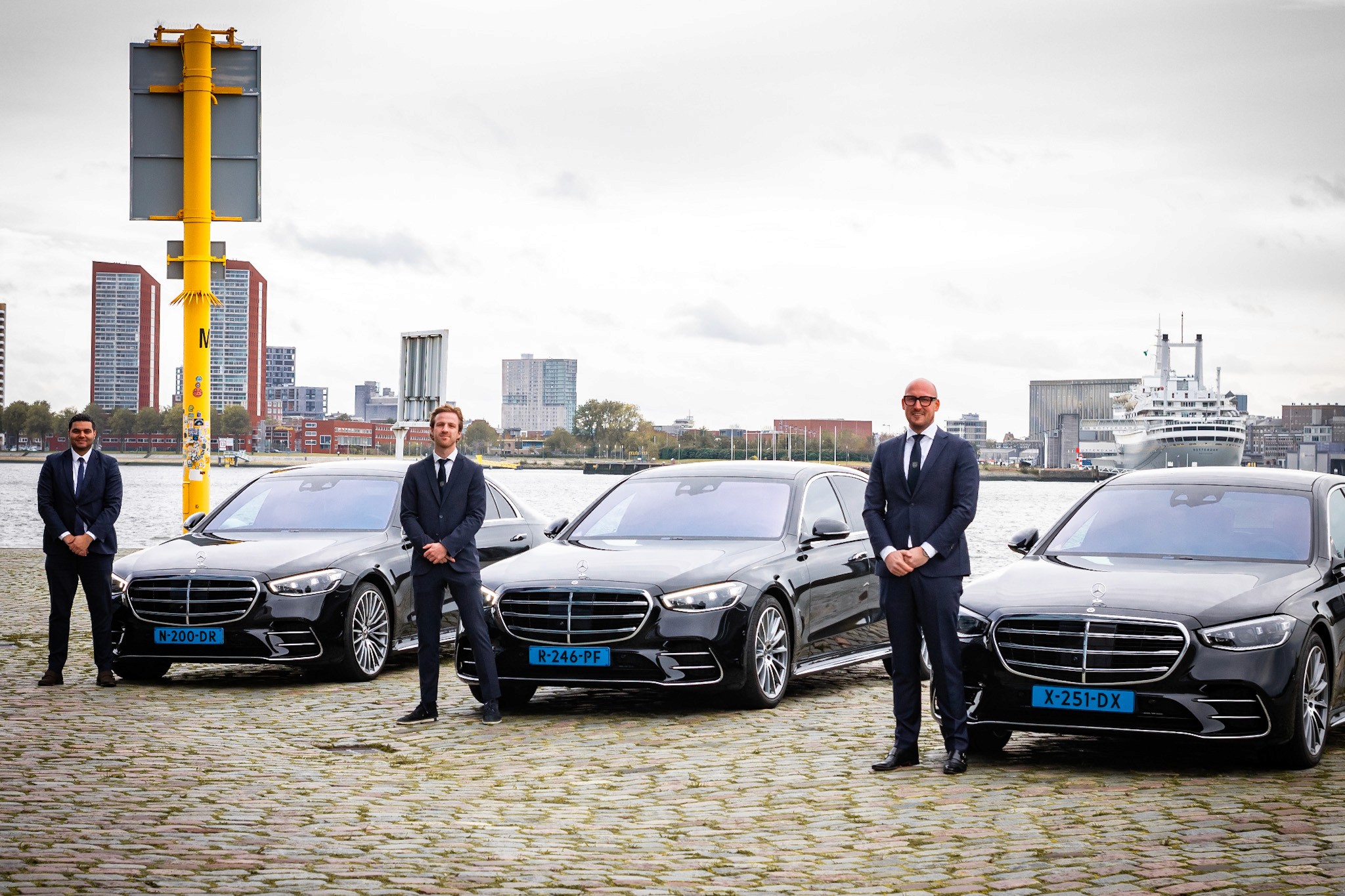
Logistics that are right do not stand out. And that is exactly the goal of a shuttle driver at business events: guests arrive relaxed, leave without queues, and no one on your team is busy asking ‘where is the next bus?'.
Yet in practice it often goes wrong at the detail level. A pick-up point that is too tight, unclear boarding points, a peak moment after a keynote or a VIP who unexpectedly has to leave earlier. The result is logistical noise: unrest, delays and ad-hoc firefighting.
In this article you will read how to deploy a shuttle driver for events with maximum control, minimal disruption and a high-end experience, including practical approach, KPIs and a selection checklist.
What do we mean by a shuttle driver at events?
A shuttle driver (or shuttle bus driver) provides scheduled shuttle runs between fixed points, for example:
P+R or overflow car park to the event location
Hotel to venue (and back)
Station or airport to the location
Backstage or crew transport between zones on or around the site
The distinction from ‘ordinary transfers’ is important: with shuttle transport, it is all about rhythm, repetition and capacity. You are not managing one journey, you are managing a system. That is why alignment, dispatch and real-time adjustments matter more than the vehicle alone.
When is a shuttle driver the best choice?
Shuttle deployment is especially interesting if you recognise one or more of these situations:
1) Limited parking capacity or dispersed arrival points
Many venues have a capacity limit on their own site. A shuttle service absorbs the inflow without the surroundings grinding to a halt.
2) Clear peak moments
Think of the start of registration, the end of the programme, or a ‘mass exit’ after a final. Shuttle planning then becomes a capacity question: how many people per time slot, with which vehicles, on which route.
3) High-end guests with strict punctuality requirements
For executives, speakers, partners and VIPs, you want calm and predictability, even if the rest of the event is dynamic.
4) Tight security and access zones
At events with credentials, backstage areas or closed routes, controlled mobility is often a prerequisite.
The core: management prevents logistical noise
A shuttle driver is only as strong as the management around it. In practice, you will see two models:
Hiring separate drivers or vehicles: you organise the planning, control, routes, briefings and contingency scenarios yourself.
Shuttle as a managed service: one provider handles preparation, coordination, driver deployment and adjustments end-to-end.
For business events with reputational risk, that second model is usually more efficient. You are not just buying journeys, you are buying peace of mind.
Stuur Chauffeurs positions itself precisely at that intersection: as a premium mobility partner with experienced, screened drivers and a coordination model in which mobility must not fail. You can see their event approach, for example, in the case Achmea Staff Festival (13,000 visitors, multiple departure locations, shuttle and parking logistics) via this case page.
A practical approach in 6 building blocks
The building blocks below help you design shuttle transport so that it works ‘invisibly well’.
Building block 1: Predict demand, don't guess
Start by translating your programme into mobility demand:
Number of guests by likely arrival method (car, public transport, hotel, VIP)
Peak moments per 15 or 30 minutes
Required throughput on departure (including overruns)
Special flows: crew, suppliers, speakers, late arrivals
Without this forecasting, you will end up either too tight (queues) or too loose (unnecessary costs).
Building block 2: Design stops, walking routes and pick-up points
Most delays are not caused on the road, but when boarding.
Pay attention to:
Clear, screened pick-up point (no mixing with pedestrian flows)
Cover or waiting area (comfort and appearance)
Clear signage and host/usher support at peak times
Space for rolling suitcases, people with disabilities and badge scanning
Building block 3: Choose the vehicle mix based on flow and experience
‘Bigger’ is not always better. The right mix depends on peak pressure and the desired image.
For high volumes, coach shuttles are efficient.
For premium shuttles, luxury MPVs or VIP minibuses are often suitable.
For executives and VIPs, a dedicated car and driver is sometimes more logical than joining a shuttle flow.
If you want to align the vehicle choice with appearance, comfort and space, the article The Top 10 Cars for Professional Chauffeur Services is a useful reference.
Building block 4: Driver briefing and behavioural standard
With shuttles, consistency is what matters. A professional briefing contains at least:
Route variants and diversions
Stop protocol (position, doors, luggage, boarding)
Communication line with central coordination
Dress code and guest approach (especially at high-end events)
Procedure for no-shows, last-minute changes and incidents
In a high-end context, discretion is essential. You can also see that way of working in production environments, such as in the case Netflix | Amsterdam Empire, where planning and discretion come together continuously.
Building block 5: Real-time adjustments with tracking and central control
A shuttle plan is a starting point, not reality. Traffic, flight delays and programme overruns require adjustments.
Professional delivery therefore includes:
Central dispatcher or dedicated contact point
Live status per vehicle (where relevant)
Clear escalation: when to add extra vehicles, when to change route, when to adjust time slots
With events involving many variables and peak moments, that is not a luxury. It is risk management. In the case Formula One Limited, for example, it is described how live coordination and flexibility are crucial in an environment with limited infrastructure and tight time windows.
Building block 6: Redundancy, because mobility must not fail
Redundancy does not mean ‘double everything’, but smart coverage:
Buffer in vehicles or stand-by capacity at the right moments
Back-up routes and alternative stops
Agreements about last-minute scaling up and decision-making authority
This is also where a mobility partner makes the difference compared with separate deployment.
What does good preparation look like in practice?
The timeline below is a workable format for business events. Depending on scale, it can be shorter or longer.
Moment | Focus | Deliverable you want |
|---|---|---|
6 to 4 weeks in advance | Inventory and design | Flow analysis, stop plan, initial vehicle mix |
4 to 2 weeks in advance | Operational planning | Trip plan, route variants, crew planning, briefing concept |
2 to 1 week in advance | Alignment with stakeholders | Agreements with venue, security, parking management, hotel(s) |
3 to 1 day in advance | Finalising and testing | Final passenger flows, communication tools, test of the stop set-up |
Event day(s) | Execution and adjustment | Central management, monitoring, quick decision-making |
Afterwards | Evaluation | KPIs, lessons learned, improvement points for the next edition |
KPIs that make logistical noise measurable
‘It felt calm’ is a valuable outcome, but you also want to be able to substantiate it. For event shuttles, these are common KPIs:
KPI | What it tells you | Practical definition |
|---|---|---|
Waiting time at the stop | Experience and flow | Average and peak waiting time per time slot |
On-time performance | Reliability | % of journeys within the agreed window |
Cycle time per round | Capacity | Stop to stop including boarding |
Load factor | Efficiency | Average number of passengers per trip |
Incidents | Risk | Number of operational escalations (route, vehicle, safety) |
By agreeing KPIs in advance, you make expectations concrete, both internally and towards the supplier.
Privacy and passenger lists (GDPR) in one paragraph
If you work with name lists (VIP, management, meet & greet), treat them as personal data. Agree who receives which data, how long it is retained and how it is secured. Basic information on obligations can be found at the Dutch Data Protection Authority.
What does a shuttle driver cost for an event?
Without your numbers and time slots, a price indication is often misleading. You can, however, get a clear picture of the main cost drivers in advance:
Number of vehicles and type (luxury car, MPV, minibus, coach)
Deployment duration and peak structure (long day versus short peak with stand-by)
Night hours, weekends and waiting time
Distance and routing (city centre versus outlying area)
Complexity of coordination (multiple locations, VIP flows, live adjustments)
A professional quote for event shuttles therefore describes not only vehicles, but also management, scenarios and agreements about changes.
Selection checklist: how to recognise a party that delivers calm
If you want to prevent logistical noise, ask at least these questions:
Who is the fixed point of contact on the day itself, and what is the escalation line?
How is planning translated into driver briefings and stop procedures?
How are last-minute changes handled (extra trip, VIP leaves earlier, programme shift)?
What experience is there with large-scale inflow/outflow and limited infrastructure?
How do you safeguard quality and discretion with drivers (selection, representativeness, behaviour)?
For organisations that want to scale not only events but also executive transport structurally, it may be interesting to look at the on-demand model described by Stuur in the case Unilever | Scalable mobility.
Frequently Asked Questions
What is the difference between shuttle transport and a shuttle driver? Shuttle transport describes the mode of transport (back and forth between fixed points). A shuttle driver is the driver deployment within that system, including protocol and control for repeated trips.
How many shuttle vehicles do I need for my event? That depends on your peak load, distance per round trip and desired maximum waiting time. With a simple flow analysis per time slot, you can determine the required capacity realistically.
Can shuttle transport be combined with VIP and executive transport? Yes. In practice, a hybrid model often works best: shuttles for volume, separate deployment for VIPs, speakers or management with their own time slots.
How do you prevent queues at the pick-up point? By designing the stop (space, routing), clear communication and, above all, by managing round time and capacity during peak moments. Real-time adjustments are decisive here.
Is tracking or monitoring necessary? For small-scale shuttles, not always. For events with tight time windows, multiple locations or reputational risk, monitoring is a practical way to make quick adjustments and prevent escalations.
Deploy a shuttle driver without noise? Work with a single control point
If you want shuttle transport that feels like part of your event production, not a separate transport line, then control is the difference. Stuur Chauffeurs supports organisations with experienced drivers and full coordination for business mobility, from shuttles to VIP transport.
View relevant event cases such as Achmea Staff Festival and Formula One Limited, or contact us via the Stuur Chauffeurs website for a tailor-made proposal (you can also call directly on 010 307 4525).


Let us help you think about your mobility.
An informal consultation. We listen, analyse, and present a proposal that suits your situation.