
Coach driver at events: what can you expect?
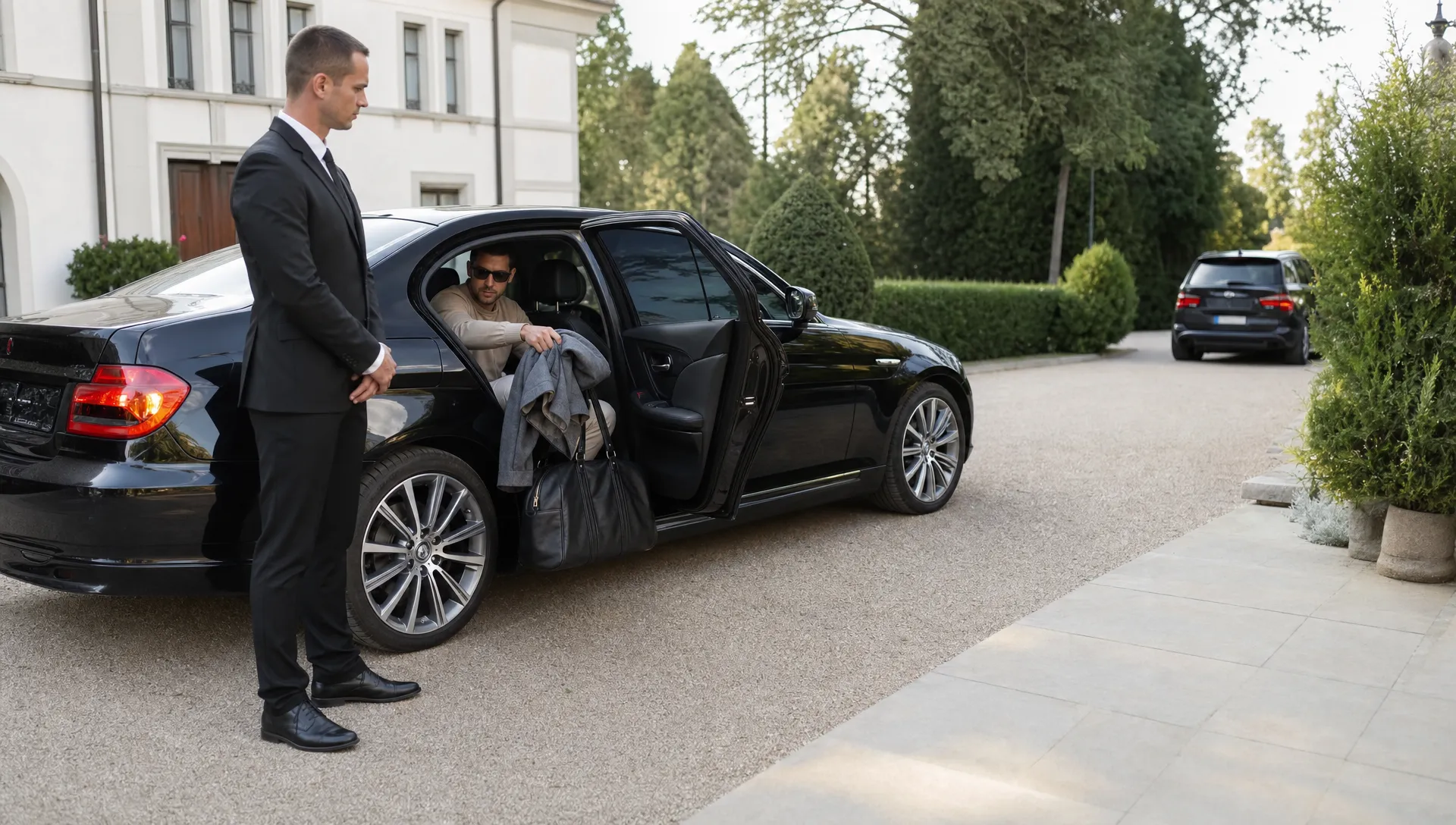
At a high-end event, the experience does not start at the entrance, but at the moment guests step in. Whether it is a congress, board meeting, gala, product launch, or international delegation, group transport must be safe, punctual, and representative. The coach driver plays a larger role in this than is often thought.
A coach driver is not just the person driving the bus. At events, he or she is part of the operational logistics: ensuring guests arrive on time, handling changes calmly, manoeuvring safely at busy locations, and communicating professionally with the event organisation. Especially when executive board members, VIP guests, or international relations are involved, the difference between simple transport and tightly orchestrated mobility is immediately noticeable.
In this article, you will read what you can realistically expect from a coach driver at events, which agreements you need to secure beforehand, and when additional coordination or separate VIP transport is wise.
What does a coach driver do at events?
A coach driver provides group transport by coach or bus. On regular trips, this mainly revolves around the route, safety, and scheduling. At events, an extra layer is added: timing, guest experience, communication, and flexibility.
Think of transfers from hotels to a congress venue, shuttle transport between parking lots and an event site, transporting employees to a company party, or trips for international guests from an airport. In all these situations, the driver must not only be able to drive, but also understand the impact of delays, an incorrect pick-up location, or unclear communication.
For corporate and premium events, the driver is often the first visible point of contact in the transport chain. A calm attitude, neat presentation, and clear coordination with the organisation are therefore essential.
The basics: entitlement, safety, and professional competence
From a professional coach driver, you should expect all legal requirements to be in order. To drive a bus or coach in the Netherlands, a category D driving licence is generally required. In addition, professional passenger transport is subject to professional competence requirements, such as Code 95. The exact requirements depend on the vehicle and deployment, but as a client, you must be able to trust that the transport provider has verifiably secured this.
The overview of driving licence categories from the national government displays the official classification of driving licences. In addition, the Human Environment and Transport Inspectorate (ILT) supervises, among other things, bus transport and compliance within the sector.
In addition to paper qualifications, experience and attitude count at least as heavily. A driver at an exclusive event must be used to busy arrival flows, tight schedules, secure locations, VIP protocols, and last-minute adjustments. It is about driving safely, but also about acting professionally under time pressure.
Why event transport places different demands than a standard trip
A coach journey for an event is rarely a simple A to B transfer. Planning is influenced by programme elements, traffic congestion, parking windows, walking distances, security procedures, and the dynamics of large groups.
At a congress, a ten-minute delay can mean guests miss the opening. At a gala, a poorly chosen drop-off point can cause a bottleneck at the red carpet. At an international board meeting, ambiguity about the route can immediately detract from the professional impression.
Therefore, a coach driver at events should be well-briefed beforehand. Not only about departure and arrival times, but also about who the contact person is, which route has priority, where the bus is allowed to wait, and what should happen if the programme runs late.
For larger or more complex routes, it is wise not to organise coach transport in isolation, but as part of complete professional event transport. This creates a single transport plan in which group transport, executive rides, VIP transport, and any airport movements align with each other.
What you can expect beforehand
The quality of an event trip is largely determined before the driver arrives. A professional approach starts with a clear intake, practical route planning, and agreements on communication.
In the preparation, the following elements should not be missing:
Element | What you can expect | Why this is important |
|---|---|---|
Briefing | Clear information about the programme, locations, times, and contact persons | Prevents confusion on the day of the event |
Route planning | Check of route, travel time, drop-off points, and potential bottlenecks | Limits delays and unnecessary detours |
Pick-up location | Clear agreements on the exact location, visibility, and walking route | Improves the flow for guests |
Waiting time | Pre-determined margins and agreements in case of delays | Provides peace of mind during programme changes |
Communication | Single operational point of contact for driver and organisation | Speeds up decision-making when changes occur |
Back-up scenario | Plan for delays, road closures, or a changed programme | Prevents improvisation at a critical moment |
For premium events, sharing only a departure time is not enough. The driver needs to know how the transport fits into the overall programme. Do guests need to arrive exactly before a keynote? Is there a secure entrance? Are hospitality hosts being used? Are there multiple buses that need to run in phases? These kinds of details determine whether the transport runs smoothly and professionally.
What you can expect on the day of the event
On the day itself, the driver must above all bring calm. That starts with being on time, keeping in good contact with coordination, and dealing professionally with guests.
A coach driver at events should be presentable, position the bus safely, and communicate clearly about boarding, alighting, and any changes. For international guests, basic communication in English may be desirable. For business groups, discretion is key: conversations between guests, guest lists, or programme details are not discussed outside of the assignment.
The driver must also be able to think practically with you. If a street is unexpectedly closed, a speaker departs later, or a group is incomplete, it is up to the driver to coordinate calmly with the responsible contact person. At the same time, it must be clear that safety and legal driving and rest times remain leading. A professional driver will never take unnecessary risks to rescue an overly tight schedule.
Where the driver's role ends and coordination begins
A common misconception is that the coach driver also automatically carries out the entire transport coordination. That is not always realistic. The driver operates the vehicle, monitors safety, and communicates with the agreed contact person. But for larger events, separate coordination is often required.
Think of managing multiple vehicles, coordinating with security, contacting hotels, changes in flight arrival times, receiving VIPs, and updating the schedule throughout the day. This requires a dedicated point of contact who keeps the overview, so that drivers can focus on their primary task.
For event managers, this distinction is important. If you deploy a single bus for a straightforward transfer, a good driver with a clear briefing may be sufficient. With multiple groups, different guest levels, or a programme with little margin, transport coordination is not a luxury, but a requirement for control.
When a coach is not the right solution
A coach is efficient for groups, but not always suitable for every guest. For executive board members, keynote speakers, investors, artists, or international VIPs, different requirements often apply: privacy, flexibility, individual timing, and a higher level of service.
A CEO who needs to switch between two appointments has little use for group transport that only departs when everyone is present. A keynote speaker who needs to go to an airport immediately after the stage is better served with individual transport. A VIP guest who needs to arrive discreetly is not someone you want walking in with a large group.
In such situations, a combination of solutions is stronger. Coaches for general guests, separate sedans or luxury vans for high-profile guests, and a central transport plan for the entire operation. For directors and board members, executive car service with a professional chauffeur can be the right addition. For guests where discretion, comfort, and presentation carry more weight, VIP transport often fits better.
Questions you need to ask before you book
A quote for coach transport often seems clear at first glance: date, time, route, number of people, and vehicle capacity. For corporate events, that is too limited. The quality lies in the operational details.
Ask these questions before confirming in any case:
What qualifications and experience does the coach driver have with event transport?
Who is the dedicated point of contact before and during the event?
Have pick-up and drop-off locations been checked for accessibility and safety?
How is a delay in the programme handled?
Are waiting times, parking costs, and extra trips clearly included in the quote?
What is the plan in case of traffic congestion, road closures, or a change of location?
How are multiple vehicles or trips coordinated with each other?
What agreements apply regarding discretion, presentation, and communication with guests?
A professional provider will not find these questions difficult. On the contrary, they form the basis for realistic planning. When a transport provider only aims for the lowest trip price and pays little attention to scenarios, briefing, and contact structure, that is a risk for high-end events.
Watch out for the hidden costs of an overly tight schedule
At events, the cheapest transport solution is rarely automatically the best. A schedule without buffers can lead to missed programme elements, unrest among guests, and extra pressure on the event organisation. Costs can also arise from extra waiting time, detours, parking bays, night-time deployment, or additional vehicles.
It is therefore wiser to assess quotes based on completeness rather than just hourly rate or trip price. A strong quote makes it clear what is included, which assumptions have been made, and how changes are handled. Especially with corporate clients, predictability is often more valuable than a minimal saving.
Appearance counts too. A coach driver who arrives unprepared, does not know the location, or has no clear instructions can needlessly disrupt a carefully organised event. Professional transport is not a separate final piece, but part of the guest journey.
The best approach: combine driver, planning, and coordination
For a smooth event, the coach driver is important, but not the only factor. The best result is achieved when the driver, vehicle, planning, and coordination are designed together. That means thinking ahead about guest groups, priorities, traffic scenarios, arrival experience, and any exceptions.
Stuur Chauffeurs works as a premium mobility partner for organisations where transport must be reliable, discreet, and tightly organised. At events, the emphasis is on customisation, clear communication, and professional drivers who understand that mobility is part of the total experience.
If you are organising an event where coaches, executive transport, VIP rides, or airport transfers come together, it is wise to have a mobility proposal worked out early. This prevents the day of the event from becoming dependent on individual trips and ad-hoc decisions.
Frequently Asked Questions
Does a coach driver always need a category D driving licence? To drive a bus or coach, a category D licence is typically required. For professional transport, professional competence requirements, such as Code 95, also apply. Ask the carrier for confirmation that all legal requirements are secured.
Can a coach driver also act as a host? A driver can speak to guests professionally and assist with boarding and alighting, but is not a replacement for a hospitality host or event coordinator. For larger events, separate guidance at pick-up locations is wise.
How much buffer should I schedule for event transport? That depends on distance, city, time, location, and programme. For important arrivals, such as keynotes, executives, or international guests, an extra margin is wise. A professional mobility partner can advise on a realistic buffer per trip.
What happens if the event runs late? Establish beforehand how waiting time, extensions, and changes are handled. Also take driving and rest times into account. For a long or complex programme, a back-up driver or alternative vehicle may be necessary.
When do I choose separate VIP transport alongside a coach? Choose separate VIP transport when privacy, flexibility, individual planning, or presentation is more important than group logistics. This often applies to board members, speakers, artists, investors, and international relations.
Request a quote for event transport with professional coordination
Do you want to combine coach transport with executive rides, VIP transport, or complete event mobility? Then a bespoke proposal is the most reliable basis. Stuur Chauffeurs thinks along with you about planning, driver deployment, contact structure, and last-minute adjustments, so your guests arrive without worries.
Request a quote via Stuur Chauffeurs or call 010 307 4525 directly for a suitable transport solution for your event.


Let us help you think about your mobility.
An informal consultation. We listen, analyse, and present a proposal that suits your situation.