
What an executive chauffeur adds to business mobility
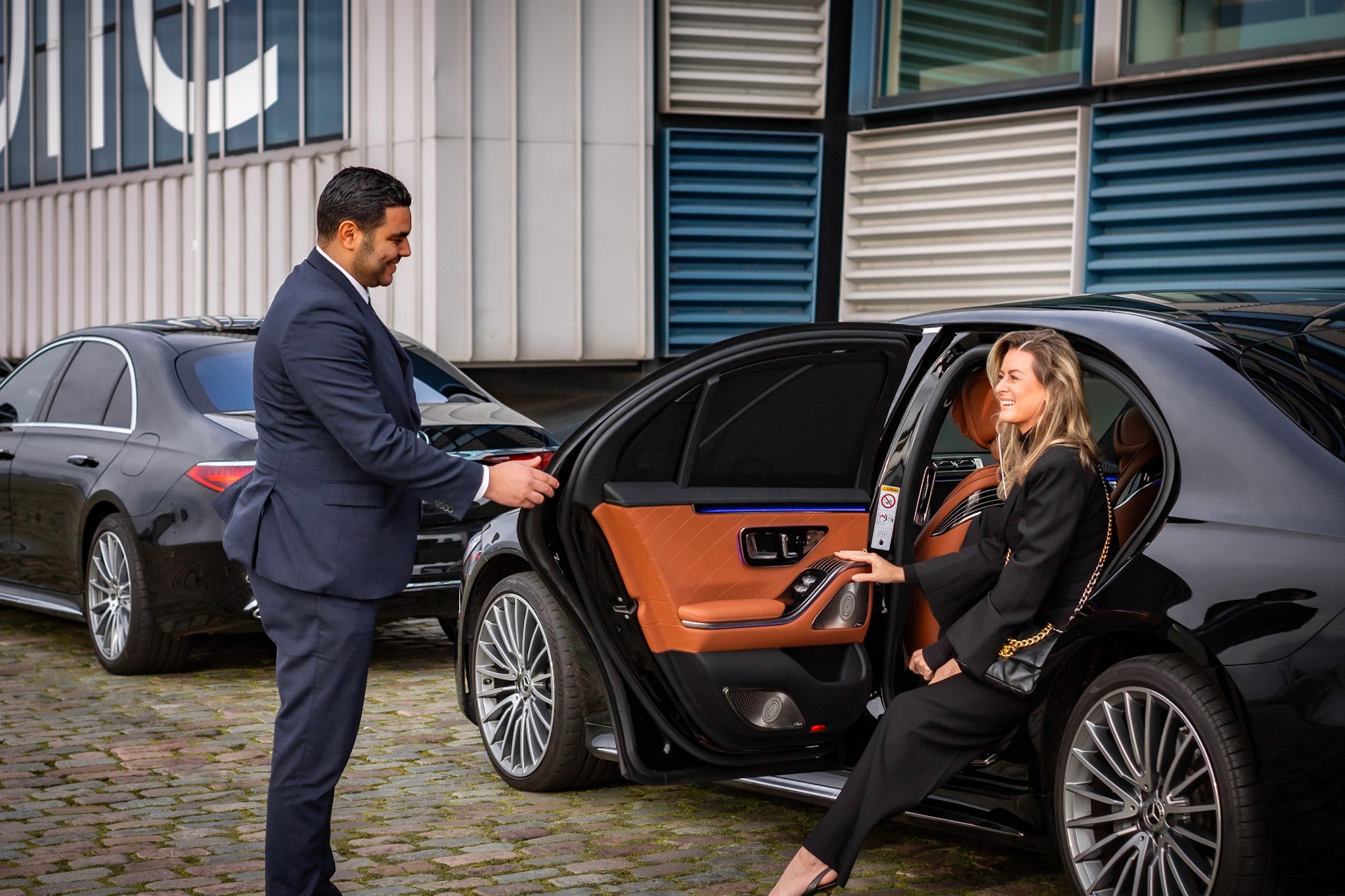
Business mobility is rarely a “journey from A to B”. For directors, boardrooms and high-end teams, it is about continuity, time, discretion and control. An executive chauffeur (also known as an executive chauffeur or director’s chauffeur) adds value precisely there: by making travel movements predictable, reducing risk and creating room for focus.
In this article, you will read what an executive chauffeur actually adds to business mobility, when it is worth it compared with alternatives, and which quality criteria you may expect.
1) Time savings that go beyond “not driving yourself”
The biggest gain from executive transport is not only that someone is no longer behind the wheel. It is above all that travel time becomes usable working time again, without interruptions from route choices, parking, phone calls, transfers or uncertainty about arrival.
In practice, this means:
Preparing and debriefing between appointments (calls, memos, board meetings, confidential calls).
More calm in the daily schedule because arrival and departure can be planned more tightly.
Less variation in travel time thanks to a chauffeur who knows the area, anticipates and adjusts in real time.
Delays remain a factor in the Netherlands, especially around the Randstad. The INRIX Global Traffic Scorecard shows every year how traffic congestion structurally affects productivity loss. An executive chauffeur cannot eliminate congestion, but can manage the impact through planning, buffer strategy and alternative route use.
2) Control and predictability: mobility must not fail
For executive and leadership teams, mobility is a critical link. It is about reputation, punctuality and continuity. A professional executive chauffeur therefore works differently from ad hoc transport.
Proactive planning instead of reactive driving
An executive chauffeur is part of a mobility process:
coordination around agenda, locations, security or reception procedures
time windows and buffers around board meetings, investor meetings and events
fixed pick-up points, route preferences and fallback options
At Stuur Chauffeurs, this fits the role as a premium mobility partner: with proactive coordination, a fixed point of contact and the ability to make last-minute adjustments if the day turns out differently than planned.
Less dependence on third-party availability
Taxis, ride-hailing and standalone chauffeurs can work perfectly well for occasional journeys. But in executive mobility, “available” is not the same as “suitable”. Think of peak times, major events, international delegations or a tightly scheduled chain of appointments.
In practice, the difference is often this: an executive chauffeur is set up for certainty, not just transport.
3) Discretion and safety: professionally present, but invisible
Executive transport requires an attitude that suits director and VIP environments. Discretion is not a slogan here, but behaviour in the details:
no conversations about passengers, locations or timings
proper handling of assistants, security and reception teams
calm in the car (phone calls, meetings, sensitive topics)
This is also crucial in dynamic environments. In production and media settings, where planning constantly changes, reliability and invisible flexibility count most. See for example the case Netflix | Amsterdam Empire, where discretion and planning around filming days and visibility in shot came together.
4) Appearance and hospitality: part of your brand
For many organisations, executive transport is also an extension of brand experience. The car and chauffeur are often the first physical point of contact for:
board visits or international guests
roadshows and conferences
high-end appointments (private banking, legal, M&A, family offices)
An executive chauffeur adds value through hospitality: being ready on time, correct presentation, a smooth welcome and a consistent service experience. Especially when directors are on the road several times a week, that consistency is noticeable.
5) Flexibility at executive level: diaries change, transport must move with them
Executive diaries are rarely stable. A meeting overruns, a flight changes, an extra stop is added. An executive chauffeur service that is structured for business can then adapt without disrupting the rest of the day.
You see this in situations with high pressure and many stakeholders. In the case Formula One Limited, that dynamic is recognisable: peak moments, changes and logistical constraints require coordination and flexibility, not just “a car with a chauffeur”.
6) Costs and deployment: when is an executive chauffeur rational?
There is sometimes a perception that an executive chauffeur is mainly a luxury choice. In reality, it can also be an efficiency model, especially when you look at deployment, utilisation and the difference between fixed and variable costs.
For organisations with fluctuating demand, a scalable model can be more sensible than fixed staffing. In the case Unilever | Scalable mobility, this is described concretely: lower fixed costs and more efficient deployment, while quality and continuity remain intact.
The comparison below helps to clarify the options.
Option | Strong in | Less suitable for | Practical note |
|---|---|---|---|
Executive chauffeur (dedicated or fixed pool) | Continuity, discretion, control, fixed standards | Pure price optimisation for occasional journeys | Ideal for directors, VIPs and critical mobility |
Taxi or ride-hailing | Quick to book, accessible | Confidentiality, fixed quality, peak demand | Quality and availability can vary |
Self-driving (lease/private) | Complete autonomy | Productivity, calm, parking, risk of delay | Travel time is rarely “real working time” |
In-house chauffeur (own employment) | Maximum control and availability | Flexibility with fluctuating demand, cover for sickness/holiday | Requires planning, back-up and HR structure |
7) What you should at minimum expect from a professional executive chauffeur
An executive chauffeur is more than driving ability. It is about professional standards, selection and training.
Key elements to assess:
Screening and reliability (experience, references, code of conduct)
Driving style and comfort (defensive, anticipatory, smooth)
Communication and etiquette (brief, correct, situational)
Punctuality as a system (not “leaving on time”, but “arriving on time”)
Coordination with PA/EA (agenda, changes, no-show scenarios)
Anyone who wants to understand which qualifications and professionalism often go with this profession can also read the article Becoming a chauffeur at Stuur Chauffeurs.
8) Car, comfort and suitable vehicle: own car or luxury vehicle
Executive transport can take place in your own car, or in a representative vehicle from the provider. Which choice is best depends on:
desired appearance (saloon, MPV, VIP van)
privacy (glass, space, seat comfort)
practical requirements (luggage, multiple passengers, city access)
For a compact overview of models and applications, the article The top 10 cars for professional chauffeur services is relevant.
9) Executive chauffeur in practice: where the difference becomes truly visible
An executive chauffeur adds the most value in situations where “mobility” is part of a critical chain:
multiple appointments in a day in different cities
airport transfers with tight connections
visits from international delegations with high expectations
events where timing and routing are decisive
In larger mobility operations, transport coordination comes into play. The case Achmea Staff Festival shows how planning, monitoring and logistical choices make the difference between controlled flow and chaos.
Frequently asked questions
What is the difference between an executive chauffeur and a regular chauffeur? An executive chauffeur is set up for executive environments: discretion, etiquette, predictability and coordination with diary and organisation are central.
Can executive transport also be in my own car? Yes, in many organisations that is preferred. Then the chauffeur is the constant factor, while you use your familiar vehicle.
Is an executive chauffeur only for CEOs? No. Directors, partners, board members, high potentials and VIP guests also benefit from calm, control and reliability.
How do I guarantee continuity in the event of sickness, holiday or peak demand? Choose a provider that works with a fixed pool and coordination, so there is back-up and scalability without loss of quality.
When is executive transport more cost-efficient than a full-time chauffeur on the payroll? Often when demand fluctuates. Variable deployment and scalability can then be more economical than fixed staffing with lower utilisation.
Request a quote for executive transport with control
Do you want to assess what an executive chauffeur delivers for your organisation, in time, calm and continuity? Stuur Chauffeurs helps set up executive transport with a fixed standard, a single point of contact and the ability to scale flexibly.
Contact us via stuurchauffeurs.nl for a no-obligation assessment and a tailor-made proposal.


Let us help you think about your mobility.
An informal consultation. We listen, analyse, and present a proposal that suits your situation.